FUE vs DHI hair transplant: which method suits you and why
How FUE works, what DHI changes, whether results last and why the surgeon matters more than the method name. A calm, practical comparison.
FUE vs DHI hair transplant is one of the first things patients ask us about, usually after a week of watching clinic videos that all claim their method is the best. The truth is less dramatic and more useful: the two techniques share the same foundation, differ in one key step, and the surgeon’s skill matters far more than the label on the price list. This guide explains how FUE works, what DHI changes, whether results last, and how to tell which approach fits your hair.
One note before we start: the final choice of technique is made by the surgeon after examining your scalp, donor area and pattern of hair loss. Our job as patient coordinators in Yerevan is to help you arrive at that consultation well informed.
How does FUE hair transplant work?
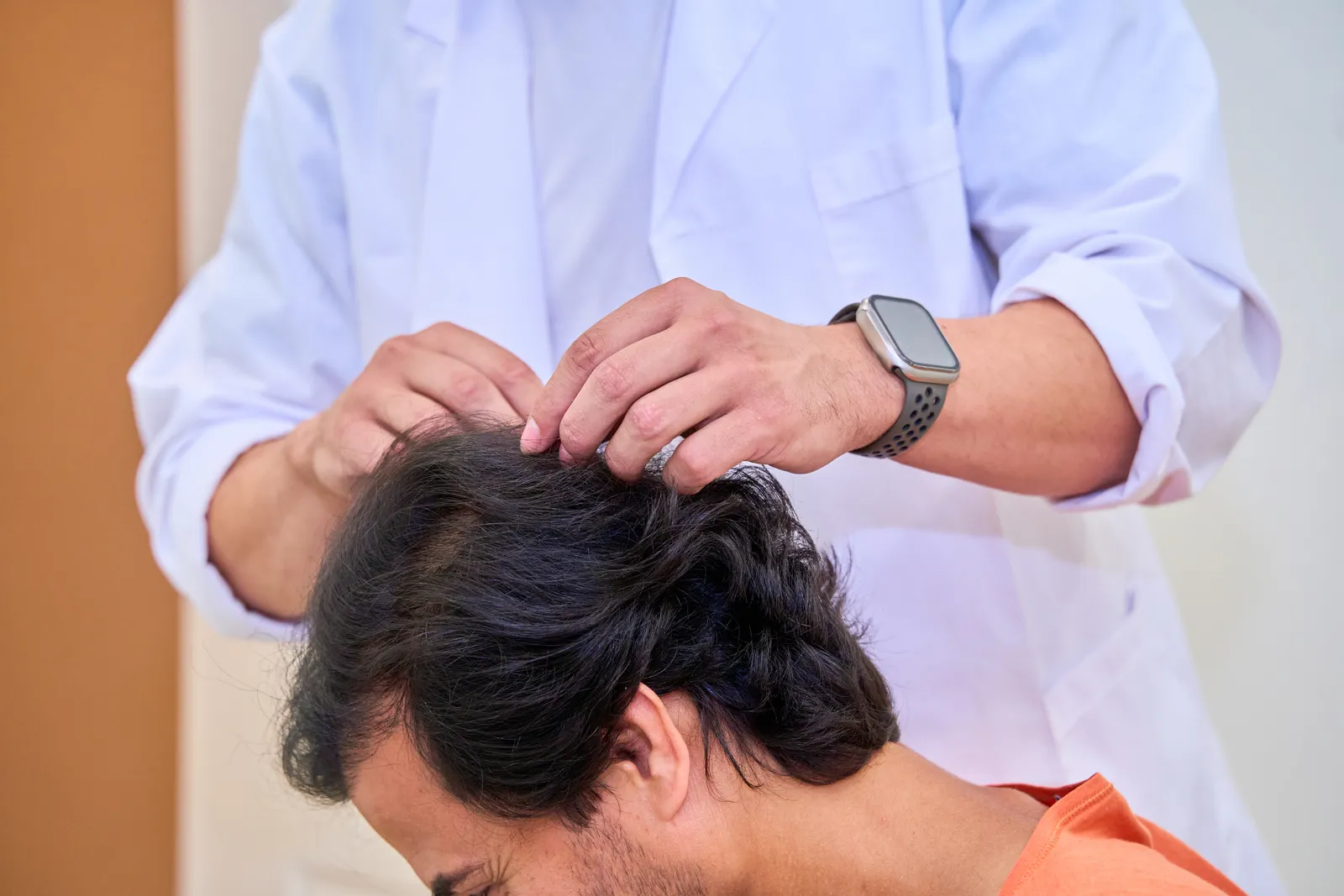
FUE stands for Follicular Unit Extraction. A follicular unit, or graft, is a natural cluster of 1 to 4 hairs growing from the same spot. In FUE, the surgeon removes these grafts one by one from the donor area, usually the back and sides of the head, using a tiny punch roughly 0.7 to 1 mm wide.
The procedure has three stages:
- Extraction. The donor area is usually trimmed short. Under local anaesthetic, grafts are harvested manually or with a motorised punch.
- Channel opening. The surgeon makes small incisions in the recipient area with a fine blade or sapphire tool. This is where the angle, direction and density of your future hair are decided.
- Implantation. Technicians place each graft into a prepared channel with fine forceps.
The main advantage of FUE over the older strip method (FUT) is that there is no linear scar across the back of the head. Instead you get many tiny dot scars that are usually invisible once the hair grows back to a normal length. FUE handles large sessions well, which makes it a practical choice when both the hairline and the crown need work.
What is DHI, and how is it different?
DHI (Direct Hair Implantation) is often marketed as a separate technology, but it is really a variation of FUE. Extraction is exactly the same. The difference is in implantation: each graft is loaded into a pen-shaped implanter (often called a Choi pen), and the doctor creates the opening and places the graft in a single motion.
In practice this means:
- very precise control over the angle and depth of each graft, which helps with natural hairlines;
- easier work between existing hairs, so the recipient area often does not need shaving;
- grafts spend slightly less time outside the body.
The trade-offs: DHI is slower, needs a well-trained team, and is usually priced higher per graft. Sessions tend to cover fewer grafts than classic FUE in the same day.
FUE vs DHI: which method suits you?
There is no universally better method. Outcome depends mostly on the surgeon, the quality of your donor area and how carefully grafts are handled. Here is a side-by-side view.
| Factor | FUE | DHI |
|---|---|---|
| Graft extraction | Micro-punch, one by one | Same micro-punch |
| Implantation | Channels first, then forceps | Implanter pen, opening and placement at once |
| Session size | Suited to large areas | Usually smaller, more precise |
| Shaving the recipient area | Usually yes | Often not needed |
| Procedure time | Typically 6 to 8 hours | Often longer for the same graft count |
| Price per graft | Generally lower | Generally higher |
| Often chosen for | Extensive recession, crown | Hairline, densification, women, long hair |
Many surgeons combine both: channels for the larger area and an implanter for the front hairline. If a clinic offers only one method and dismisses the other entirely, ask why.
Is a hair transplant painful?
The procedure is done under local anaesthetic. Most patients say the injections at the start are the least pleasant part. After that you feel pressure, vibration and occasional tugging rather than sharp pain. If sensation returns, tell the team and they will top up the anaesthetic.
The day itself is long. You lie face down for extraction and then on your back for implantation, with a lunch break in between. Wear a button-up or zip top so nothing has to be pulled over your head afterwards.
For the first 2 to 3 days you may notice tightness and numbness in the donor area and some swelling on the forehead. Swelling sometimes drifts down towards the eyes around day 3 or 4. It looks alarming but usually settles on its own within a few days. Your doctor will recommend pain relief, and standard medication is usually enough.
Does FUE last forever?
Grafts come from the donor zone, where hair is genetically resistant to DHT, the hormone behind male-pattern hair loss. Grafts that survive typically keep this resistance after being moved, so transplanted hair tends to grow for many years.
The catch is that a transplant does not stop your native hair from thinning. If hair loss continues, a gap can appear over time between the transplanted area and thinning zones behind it. That is why many surgeons discuss maintenance treatment, and why younger patients with active loss are told a second session may be needed later. Any medication should be prescribed by a doctor, not started on your own.
Can FUE fail?
Yes, although with careful work most grafts take. When results disappoint, the cause is usually one of these, not the method itself:
- grafts dry out or are damaged during extraction or storage;
- the donor area is over-harvested and looks patchy;
- the patient was not a good candidate: diffuse thinning, weak donor area or unrealistic expectations;
- aftercare is ignored: scratching, early workouts, saunas, smoking;
- infection or significant folliculitis in the first weeks.
It also helps to know about shock loss. Between weeks 2 and 8, transplanted hairs commonly shed, and nearby native hair can thin temporarily. This is a normal phase. The follicles remain in the scalp and start producing new hair a few months later.
Who may not be a good candidate?
Neither FUE nor DHI fixes every kind of hair loss. A surgeon may suggest waiting or a different route if:
- hair loss is very active and not yet stable, especially in your early twenties;
- the donor area is weak and cannot cover the area you want;
- the cause is not genetic: stress, deficiencies, hormonal issues or alopecia areata;
- you have poorly controlled chronic conditions or bleeding problems.
Sometimes a dermatology check comes first. That is not wasted time; it protects you from disappointment.
How hair transplant pricing works
We deliberately do not quote figures here. Clinics in Yerevan price differently, and advertised numbers rarely match the final bill. What matters is understanding what drives the cost so you can compare offers fairly.
- Number of grafts. Set by the surgeon from photos and examination. Be wary of “unlimited graft” packages: your donor area is finite.
- Method. DHI generally costs more per graft than FUE because it takes longer.
- Who performs the key steps. Does the surgeon personally open channels and design the hairline, or do technicians?
- What is included. Tests, medication, first wash, hotel, transfers and follow-up checks.
Your real figure comes from a personal estimate after an online consultation with the surgeon.
Planning your trip to Yerevan
A hair transplant typically needs 3 to 4 days in Yerevan:
- Day 1. Arrival, in-person consultation, hairline design, blood tests.
- Day 2. Procedure, evening rest at the hotel.
- Day 3. Check-up, first wash at the clinic, aftercare instructions.
- Day 4. Flight home, if your surgeon is happy with healing.
On the plane, keep your head still, wear a loose hat only if your surgeon allows it, and avoid pressing the back of your head into the headrest. At home you send photos for review at about 1 week, 1 month, 3 months and 6 months. Learn more on our hair transplantation in Yerevan page.
Questions to ask your surgeon
- Which method do you recommend for me, and why?
- How many grafts do I need, and how many can my donor area safely give?
- Who opens the channels and designs the hairline?
- How are grafts stored during the procedure?
- Do I need maintenance treatment, and might I need a second session?
- How will follow-up work once I am home?
Frequently asked questions
Is FUE or DHI better for the hairline?
Many surgeons prefer a DHI implanter for fine hairline work because it gives precise angle control. An experienced surgeon can still create a natural hairline with classic FUE.
Can DHI be done without shaving?
The recipient area often stays unshaved with DHI, particularly for densification. The donor area is usually still partly trimmed, though longer hair on top can cover it.
Will transplanted hair fall out again?
Surviving grafts from the donor zone usually grow for years. Native hair around them can keep thinning, so ask your doctor about maintenance options.
How many grafts can be done in one session?
It depends on your donor area, the technique and the size of the bald area. Only the surgeon can set a safe number after examining you.
When can I go back to work?
Many office workers return after 5 to 7 days, once scabs and swelling have reduced. Physical work and sport usually wait longer, and your surgeon will give exact timings.
Not sure whether FUE or DHI is right for you? Send us photos of your head from the front, top, sides and back. We will arrange a free online consultation with a surgeon in Yerevan and prepare a personal estimate. You can reach us through our contact page.
This article is for general information and does not replace a consultation with a qualified doctor.
Medical information notice
This article is general information for planning purposes and does not replace advice from a qualified medical professional.