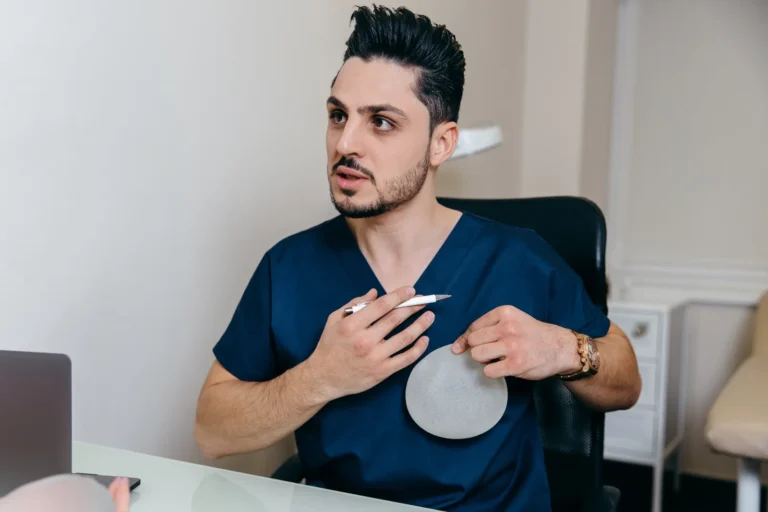
Breast reduction surgery: how it’s done, recovery and what to expect

How breast reduction is done, how it differs from a lift, when to have it after weight loss or pregnancy, and what recovery and cost really involve.
Breast reduction surgery is one of those operations where patients often say, a few weeks later, “I wish I had done this years ago.” Heavy breasts are not just about clothes that don’t fit. They can mean neck and back pain, painful grooves from bra straps, rashes under the breast and giving up running or the gym.
This guide explains how breast reduction is done, how it differs from a breast lift, when to consider it after weight loss or pregnancy, what recovery looks like and what drives the cost if you are planning surgery in Yerevan.
What is breast reduction surgery?
The medical name is reduction mammoplasty. The surgeon removes part of the breast gland, fat and excess skin, then reshapes a smaller, lighter and higher breast. The nipple and areola are moved up to a better position, and the areola can be made smaller if it has stretched.
In practice, almost every breast reduction is also a breast lift. That is why patients asking about “breast reduction and lift” are usually describing one operation, not two.
Who is a good candidate?
Breast reduction is considered when breast size affects daily life. Typical reasons include:
- chronic neck, shoulder or back pain;
- deep grooves from bra straps;
- rashes and skin irritation in the fold under the breast;
- difficulty exercising, running or finding clothes that fit;
- noticeable asymmetry;
- self-consciousness or unwanted attention.
Your surgeon also looks at your general health. Uncontrolled diabetes, serious heart or circulation problems, bleeding disorders, active smoking, a weight that is still changing a lot, or breast imaging findings that need further investigation can all be reasons to postpone or reconsider surgery.
How is breast reduction done?
The operation is performed under general anaesthesia and usually takes 2–4 hours, depending on the amount of tissue and the technique. The surgeon chooses an incision pattern based on breast size, degree of sagging and skin quality.
| Technique | Scar pattern | Usually suits |
|---|---|---|
| Vertical (“lollipop”) | Around the areola and straight down to the fold | Moderate enlargement and sagging |
| Anchor (inverted-T) | Around the areola, down, and along the breast fold | Large breasts with significant sagging and lots of excess skin |
| Periareolar | Around the areola only | Small reductions with minimal sagging |
| Liposuction only | A few tiny incisions | Selected cases where volume is mostly fat and skin is firm |
Removed tissue is usually sent for routine laboratory examination, which is standard good practice.
Breast reduction vs breast lift: what’s the difference?
A breast lift (mastopexy) removes excess skin and raises the breast but leaves the volume largely unchanged. A reduction removes gland and fat as well, so the breast ends up both higher and smaller.
If you are happy with your size but bothered by sagging, a lift is probably the right conversation. If your breasts are heavy and painful, you are looking at a reduction, which includes a lift. The surgeon confirms which one after examining you.
Risks: is breast reduction safe?
It is a well-established operation, but no surgery is free of risk. The key points to discuss honestly with your surgeon:
- Scars. They are permanent, though they fade and flatten over time and are usually hidden by underwear.
- Nipple sensation. It can change temporarily or, sometimes, permanently.
- Breastfeeding. Not everyone can breastfeed after a reduction. Tell your surgeon if you plan to have children.
- Wound healing. Slow healing or small wound openings are possible, especially where scars meet at the bottom of the breast. Smoking raises this risk sharply.
- Asymmetry and lumps. Minor differences between sides or areas of fat necrosis can occur.
- General risks. Bleeding, infection, anaesthetic complications and blood clots.
That said, studies consistently show that most patients report less pain and a better quality of life after reduction. The decision is always about weighing benefits against risks in your specific case.
Breast reduction after weight loss or pregnancy
After major weight loss, breasts often lose shape and the skin stretches. Surgeons generally recommend reaching a stable weight first, typically 6–12 months without big changes. If you still plan to lose a lot of weight, your result may change after surgery.
After pregnancy and breastfeeding, it is usually best to wait at least 3–6 months after weaning so the breasts settle. If you are planning another pregnancy, it is sensible to delay surgery, since pregnancy can change size and shape again.
Preparing for breast reduction
Good preparation makes recovery smoother. Your surgeon will give a specific list, but the basics are:
- stop smoking and all nicotine at least 4 weeks before surgery and throughout healing;
- have a breast ultrasound and, over 35–40, usually a mammogram;
- complete blood tests and an ECG, and bring a letter from your GP if you have medical conditions;
- review all medications with your doctor, especially aspirin, blood thinners, hormones and supplements such as fish oil;
- pack front-opening tops and a pillow for sleeping propped up.
If you are travelling, doing most tests at home and sending results ahead saves days in Yerevan.
Questions to ask your surgeon
- Which technique do you recommend for me, and what will the scars look like?
- Roughly what size can I expect while keeping natural proportions?
- How might surgery affect sensation and breastfeeding?
- Will I have drains, and how many nights will I stay in the clinic?
- When are stitches checked or removed, and when can I fly?
- How will we stay in touch after I go home?
Ask to see before-and-after photos of this surgeon’s own patients with a similar starting point. A good surgeon explains what to expect and does not promise a perfect, scar-free result.
Breast reduction recovery, step by step
- Days 1–3: aching, swelling, sometimes drains for a day or two. Usually one night in the clinic.
- Week 1: dressing changes and check-ups. You can walk around, but avoid effort and lifting your arms overhead.
- Weeks 2–3: return to light work for most people. Support bra day and night.
- Weeks 4–6: gradual return to exercise and normal activity, once your surgeon agrees.
- Months 3–6 and beyond: swelling settles fully and the final shape appears. Scars keep fading over about a year.
Many patients notice their back and shoulders feel lighter within the first few weeks, even while the breasts are still swollen.
Breast reduction cost and how long to stay in Yerevan
We don’t quote a single figure for breast reduction: the range is wide and an “average price” can mislead. What drives the cost:
- the amount of tissue removed and the technique;
- operating and anaesthesia time;
- whether liposuction of the sides is added;
- laboratory examination of tissue and pre-operative tests;
- nights in the clinic, garments and follow-up visits;
- your package: accommodation, transfers and an interpreter.
In some countries, breast reduction for medical reasons may be partly covered by insurance. Surgery abroad is usually self-funded, so check your own policy if this matters to you. Your exact figure comes from a personal estimate after an online consultation.
For travel, plan roughly 8–12 days in Yerevan: tests, surgery, a night in the clinic, dressing changes and a stitch check. Flying home is typically possible after about 7–10 days, but your surgeon decides after examining you. Back home, follow up with a local doctor and stay in touch with your surgeon remotely. See the range of breast procedures on our mammoplasty page.
Frequently asked questions
How long does breast reduction surgery take?
Usually 2–4 hours under general anaesthesia. The time depends on how much tissue is removed and the technique used.
Is a breast lift included in a breast reduction?
Yes, in almost all cases. The nipple is repositioned higher and the skin is tightened as part of the reduction.
Can I breastfeed after breast reduction?
Some women can, but it cannot be guaranteed. If you plan to have children, discuss it with your surgeon before surgery.
Will I have scars?
Yes, and their shape depends on the technique. They fade over time and are usually hidden by a bra or bikini.
Can breasts grow back after reduction?
Weight gain, pregnancy or hormonal changes can enlarge the breasts again. That is why surgery is best done at a stable weight.
If you have been thinking about a reduction for a while, send us your photos and questions via the contact page. We will arrange a free online consultation with a surgeon in Yerevan and a personal estimate.
This article is for general information and does not replace a consultation with a qualified doctor.
Medical information notice
This article is general information for planning purposes and does not replace advice from a qualified medical professional.