Breast augmentation recovery: what happens, timeline and implant lifespan
What really happens during breast augmentation, how recovery feels week by week, the aftercare rules that matter and how long implants actually last.
Breast augmentation recovery is usually easier than people fear, but it helps a lot to know what each week feels like before you go in. This guide covers how the operation (also called augmentation mammoplasty) actually happens, the choices you and your surgeon make about incisions and implants, a realistic recovery timeline, aftercare tips and how long implants last.
We also cover two questions we hear constantly: should you wait until after having children, and how long should you stay in Yerevan before flying home?
What happens during breast augmentation surgery
It starts with a consultation. Your surgeon examines your breasts, measures the width of the breast base and tissue thickness, checks skin quality and any asymmetry, and talks through the size and shape you want. Many clinics let you try sizers in a bra.
Next come pre-operative tests: blood work, an ECG, a breast ultrasound (often a mammogram over 35–40) and an anaesthetist review. If you are travelling, you can usually do most tests at home beforehand and complete the exam and ultrasound in Yerevan.
On the day, the surgeon marks you while standing. The operation itself typically takes 1–2 hours under general anaesthesia, longer if a lift or fat transfer is added. Most patients stay one night in the clinic, have a check and dressing change the next morning, and go back to their hotel.
Incisions and implant placement: what your surgeon decides
There are three common incision sites, each with pros and cons.
| Incision | Scar location | Advantages | Drawbacks |
|---|---|---|---|
| Inframammary | In the fold under the breast | Good visibility, precise placement, minimal contact with milk ducts | Scar may show when lying down or in a bikini |
| Periareolar | Along the lower edge of the areola | Scar often blends at the colour border | Not for small areolas; higher chance of sensation and duct changes |
| Transaxillary | In the armpit | No scar on the breast | Harder to control implant position; size limits |
Most surgeons favour the fold under the breast because it gives the most predictable result, but your anatomy and implant size guide the final choice.
Placement matters too. Over the muscle (subglandular) can work when you have enough natural tissue. Under the muscle or in a “dual plane” position is common for slimmer patients, because the muscle covers the upper edge of the implant. Under-the-muscle recovery is usually a little more uncomfortable in the first days.
Choosing implants
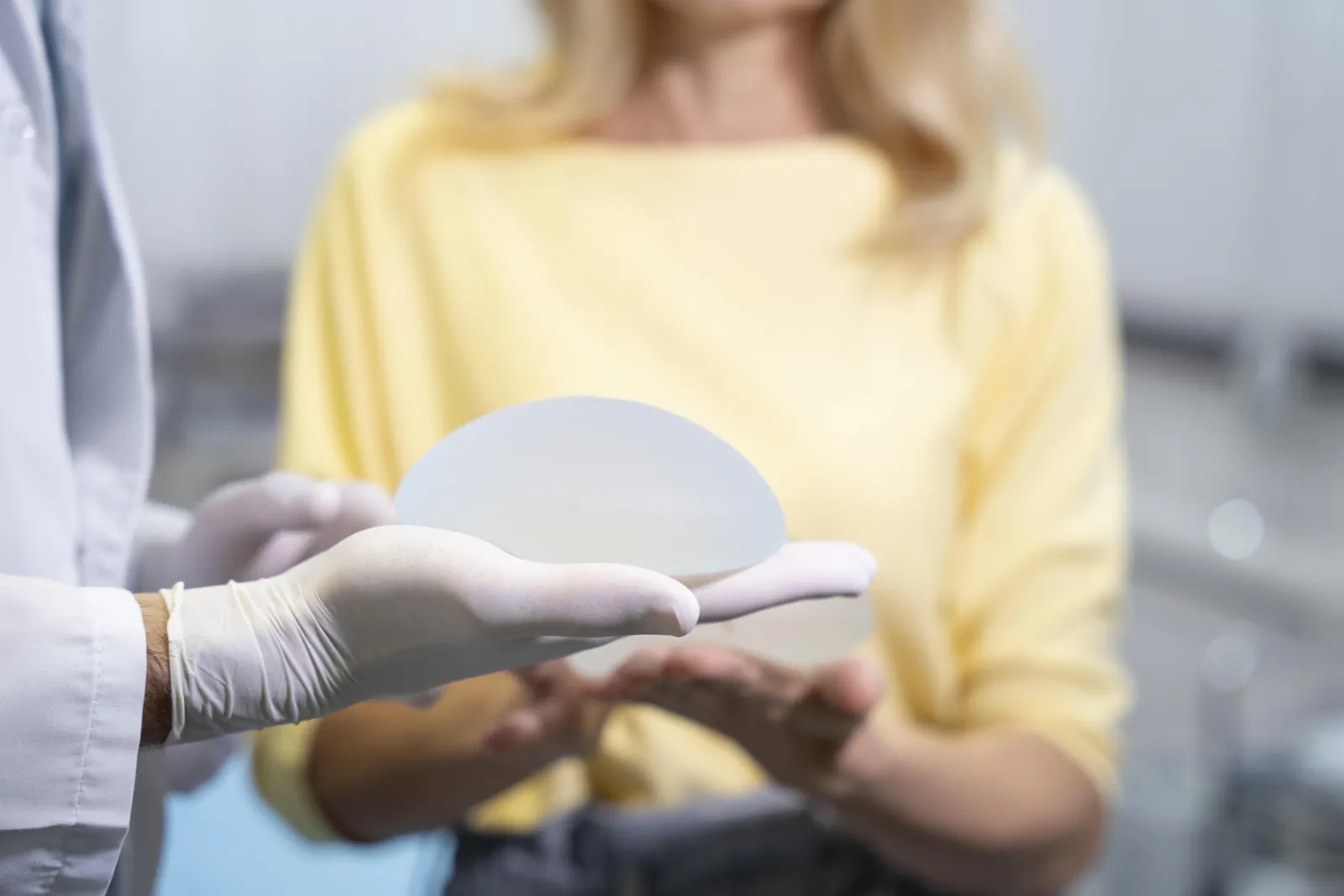
There is no single best implant, only the right one for your body. The main choices are:
- Fill: cohesive silicone gel (most common, feels more natural) or saline.
- Shape: round implants give more upper fullness; anatomical (teardrop) ones mimic a natural slope.
- Surface: smooth or textured. Because of a rare lymphoma linked mainly to textured implants (BIA-ALCL), many surgeons now prefer smooth or micro-textured surfaces.
- Profile and volume: matched to your chest width and skin stretch, not just a target cup size.
Make sure your implants are certified and that you receive an implant card with the serial numbers. Keep it safe: you will need it for future scans or surgery.
Breast augmentation recovery timeline, week by week
Everyone heals differently, but this is a typical picture:
- Days 1–3: tightness and heaviness, pain controlled with tablets. Raising your arms high is awkward, so plan help with hair washing and dressing.
- Week 1: swelling and bruising; implants sit high. Most people are walking around town. Wound check and dressing change.
- Weeks 2–3: return to desk work for most. Stitches are removed or dissolve. No lifting or reaching overhead.
- Weeks 4–6: support bra day and night, then a gradual switch to soft, non-wired bras. Exercise is usually allowed from around 6 weeks.
- Months 3–6: implants “drop and fluff” into position and the breasts soften. Scars keep fading over about a year.
Breast augmentation aftercare: the practical rules
Your surgeon’s instructions always come first, but these are the usual basics:
- Wear your support or compression bra as directed, typically 4–6 weeks.
- Sleep on your back, slightly propped up, for the first weeks. No stomach sleeping.
- No lifting heavy bags (including suitcases), no pushing or overhead reaching for several weeks.
- Walk gently every day to keep circulation going.
- Avoid saunas, baths, pools and the sea until your surgeon says the wounds are fully healed.
- Do not smoke or vape: nicotine slows healing and raises the risk of complications.
- Start scar care (silicone gel or sheets) once the incisions have closed, if your surgeon recommends it.
Contact your surgeon promptly if you notice one breast suddenly becoming much larger or more painful, a temperature above 38 °C, spreading redness, or discharge from the wound. Shortness of breath, chest pain or a swollen calf need emergency care straight away.
How long do breast implants last?
A common myth says implants must be replaced every 10 years. In reality, there is no fixed expiry date. Modern implants can last many years, but they are not lifetime devices. The longer you have them, the more likely it is that you will need another operation at some point, whether because of capsular contracture, rupture, displacement or simply natural changes in your breasts with age.
For silicone implants, periodic ultrasound or MRI is recommended to check for a “silent” rupture that causes no symptoms. Your surgeon will advise a schedule.
Breast augmentation before or after pregnancy and breastfeeding
Pregnancy and breastfeeding change the breasts: they grow, then often lose volume and droop. That is why many surgeons suggest waiting until you have finished having children, if that fits your life.
Having implants first is not forbidden. Most women with implants can breastfeed, especially with an incision under the breast where the ducts are not disturbed. Just be aware that a later correction, such as a lift, may be needed.
If you have already breastfed, it is generally best to wait at least 3–6 months after weaning so your breasts settle and your weight is stable. Breast augmentation after breastfeeding is very common, and often combined with a lift if there is significant sagging.
Risks to discuss with your surgeon
Possible complications include haematoma and seroma, infection, capsular contracture, asymmetry, implant displacement, changes in nipple sensation and visible scarring. Rarer but important topics are BIA-ALCL and symptoms some patients describe as “breast implant illness”. A good surgeon will talk you through all of these calmly and won’t call the operation risk-free.
How long to stay in Yerevan, and cost
We usually suggest planning around 7–10 days: arrival and tests, surgery, a night in the clinic and check-ups. Flying home is typically possible 5–10 days after surgery, but your surgeon makes the final call after examining you. Back home, keep in touch with a local doctor and stay in contact with your surgeon remotely by photo and video.
A few packing tips: front-opening tops, a travel pillow, dry shampoo and slip-on shoes. Ask for assistance with your luggage at the airport; you should not be lifting a suitcase.
According to the aggregator Clinics on Call (2024), breast augmentation in Armenia generally costs around $3,000–5,000. Treat this as orientation only: implant type, placement, operating time and your package all affect the total, and your exact figure comes from a personal estimate. See our mammoplasty page for details of the options.
Frequently asked questions
How long does breast augmentation surgery take?
Usually 1–2 hours under general anaesthesia. Adding a lift or fat transfer makes it longer.
How long is recovery after breast augmentation?
Most people return to desk work in 1–2 weeks and to exercise at around 6 weeks. The final shape settles over 3–6 months.
Can I breastfeed after breast augmentation?
Most women can, especially with an incision under the breast. It cannot be guaranteed, so discuss your plans with your surgeon.
When can I fly home after breast augmentation?
Typically 5–10 days after surgery. Your surgeon decides after your follow-up check.
Do implants have to be replaced every 10 years?
No, there is no fixed replacement date. Implants are changed if there is a problem or the breast shape changes, and regular checks help spot issues early.
Want to know which implant and incision would suit you? Send your photos and questions through our contact page, and we will arrange a free online consultation with a surgeon in Yerevan and a personal estimate.
This article is for general information and does not replace a consultation with a qualified doctor.
Medical information notice
This article is general information for planning purposes and does not replace advice from a qualified medical professional.