Limb lengthening recovery month by month: physio, walking and daily life
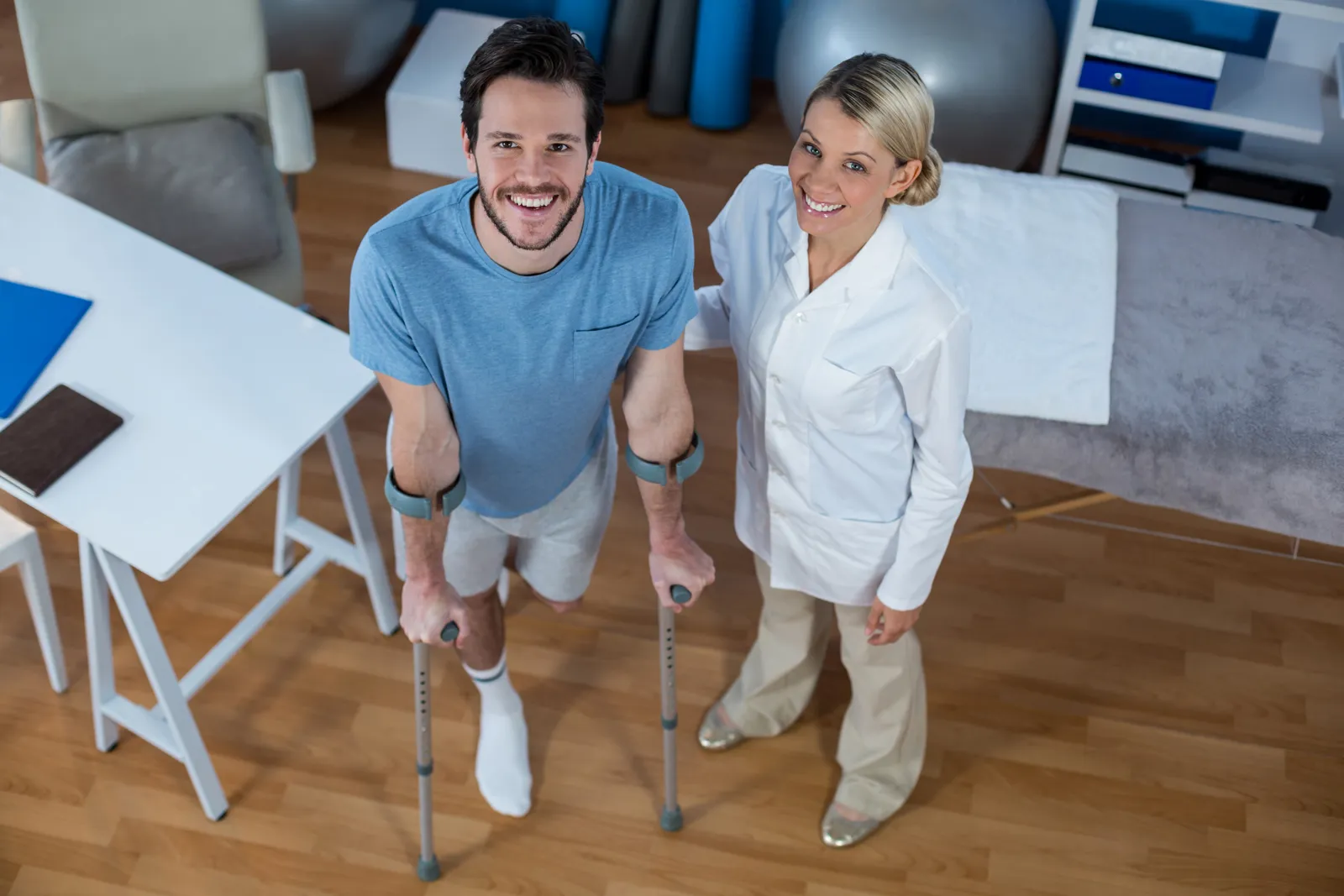
What limb lengthening recovery looks like month by month: daily physio, crutches, X-ray checks, returning to work and sport.
Limb lengthening recovery takes many months: the lengthening phase usually lasts one to three months depending on the centimetres gained, and consolidation of the new bone can take six months to a year or longer. Throughout, daily physiotherapy matters as much as the surgery itself. This guide walks you through a realistic month-by-month timeline, when you’ll walk without crutches and when work and sport are back on the table.
All timelines here are typical ranges. Your orthopaedic surgeon adjusts the plan to your case, the technique (external fixator, LON or internal nail) and what your X-rays show.
The phases: latency, distraction and consolidation
- Latency (around 5–10 days after surgery): the bone starts healing before it is pulled apart. You manage pain, learn to move with a walker or crutches and start gentle exercises.
- Distraction: lengthening at roughly 1 mm a day in several small steps. For 5 cm, that’s at least about 50 days. It is the hardest phase for muscles and joints.
- Consolidation: the new bone hardens. As a rough rule, many specialists estimate one to one and a half months per centimetre gained, though this varies widely.
Limb lengthening recovery timeline: what to expect
| Period | What usually happens | Typical mobility |
|---|---|---|
| Weeks 1–2 | Post-operative pain and swelling; distraction starts towards the end | Walker or crutches for short distances, wheelchair for longer trips |
| Months 1–2 | Active distraction, muscle tightness, daily physio, X-rays every 1–2 weeks | Crutches with partial weight-bearing, depending on technique |
| Months 3–4 | Lengthening ends for many patients; consolidation begins; regaining flexibility | Gradually more weight if the bone allows |
| Months 4–6 | Consolidation, muscle strengthening, increasingly natural gait | One crutch or none, guided by X-rays |
| Months 6–12 | Bone steadily stronger; strength and balance work | Normal walking; light sport when cleared |
| 12+ months | Possible nail or hardware removal | Impact sport only with medical clearance |
The X-rays are what move you from one row to the next. Your surgeon looks at the “regenerate”, the new bone forming in the gap, and checks that it is filling in evenly and that its outer walls are becoming visible. If it looks thin, the lengthening rate may be slowed or paused; if it is forming too fast, the rate may be increased so the bone doesn’t fuse early.
Physical therapy after limb lengthening: why it decides the outcome
The bone lengthens at the pace your surgeon sets, but muscles, tendons and nerves don’t always keep up easily. Without daily stretching, contractures develop: the knee won’t fully straighten, the ankle points down or the hip loses range.
- During distraction: daily physio, often one or two sessions with a therapist plus home exercises. Priorities: hamstring and calf stretching, full knee extension and ankle flexion.
- During consolidation: progressive strengthening, gait training, balance and, once cleared, stationary cycling or pool work.
- Warning sign: losing range of motion, new tingling or weakness in the foot should be reported straight away. Sometimes the fix is slowing the lengthening rate.
Many patients find the real challenge isn’t the operation but consistency: weeks of repetitive exercises, fatigue and low-motivation days. Knowing this upfront helps.
When can you walk and return to work after limb lengthening?
Walking: you’re up with support within days, but walking without crutches usually comes once X-rays show solid enough bone, often between months four and six. With external frames it can take longer.
Work: remote desk work is sometimes possible during consolidation once pain is controlled. Commuting to an office is often realistic around three to six months. Physical or standing jobs need longer.
Driving: only when you can brake hard without pain, are off sedating medication and your surgeon agrees. Check with your insurer too.
Sport: swimming and stationary cycling usually come first; running, jumping and contact sport typically not before a year, always with clearance.
Daily life during recovery: practical tips
- Prepare your home: no loose rugs, a shower chair, a raised toilet seat and essentials within reach.
- Sleep with your legs positioned as your physio advises so the knee isn’t bent all night.
- Eat enough protein, and take calcium and vitamin D if your doctor recommends them. Don’t smoke: it slows bone healing.
- Line up help with shopping and transport for the first weeks.
- Look after your mood: a long process is tiring. Routines, small weekly goals and someone to talk to make a difference.
Recovering in Yerevan and follow-up at home
In Yerevan, patients usually stay near the surgeon for at least the distraction phase, when check-ups are frequent and the rate is adjusted according to X-rays. That’s why the stay is counted in weeks or months, not days. Medarmenia can arrange accessible accommodation, transfers, an interpreter and physiotherapy near the clinic; see everything we coordinate on our services page.
Your surgeon decides when you can fly home based on mobility and clot risk. Usual advice: a seat with legroom, compression stockings if prescribed, good hydration and moving during the flight. Before returning, line up a local orthopaedic surgeon and physiotherapist who know your case, and keep remote contact with the Yerevan team to review X-rays.
Frequently asked questions
How long is limb lengthening recovery?
Overall, around 9–12 months for most activities, and longer for impact sport or hardware removal. It depends on the centimetres gained, the technique and your biology.
How much physio is needed?
During distraction it is usually daily, often one to two hours including home exercises. Afterwards it eases off and focuses on strength and walking.
When can I stop using crutches?
When X-rays show sufficiently solid bone, often between months four and six. Doing it too early can bend or break the new bone.
Can I fly during recovery?
Yes, if your surgeon agrees and you take precautions against blood clots. Ideally fly during a stable phase, not in the middle of adjusting the distraction rate.
Will the scars be visible?
With an internal nail, they are usually few and small. External fixators leave small pin marks that fade over time but don’t disappear completely.
Want to know what your own timeline might look like? Get in touch and we’ll arrange an online consultation with an orthopaedic surgeon, who will explain the right technique and a realistic stay plan before you commit to anything.
This article is for general information and does not replace a consultation with a qualified doctor.
Medical information notice
This article is general information for planning purposes and does not replace advice from a qualified medical professional.