Breast lift after pregnancy: with or without implants, what to choose

Breasts dropped after breastfeeding? When a lift without implants is enough, when an implant helps and how long a breast lift really lasts.
A breast lift after pregnancy is one of the most common requests we receive. After breastfeeding, breasts often feel softer, lose fullness at the top and sit lower than before. The big question follows quickly: can a lift alone fix this, or do you need implants too?
This guide explains what changes in the breast after having kids, how a lift differs from augmentation, when a lift without implants is enough and when combining it with implants makes sense. We also cover how long a breast lift lasts, lifts after implant removal and how to plan surgery in Yerevan.
What happens to breasts after pregnancy and breastfeeding
During pregnancy and breastfeeding, glandular tissue grows and the skin and supporting ligaments stretch. When breastfeeding ends, the gland shrinks, but stretched skin doesn’t fully bounce back. The result is often:
- the nipple and areola sitting lower, sometimes below the breast fold;
- an “empty” upper breast that looks flat from the side;
- wider areolas;
- asymmetry, especially if one side fed more.
How much sagging (ptosis) you have depends on genetics, skin quality, number of pregnancies, weight changes and your original breast size.
Breast lift vs breast augmentation: what each one does
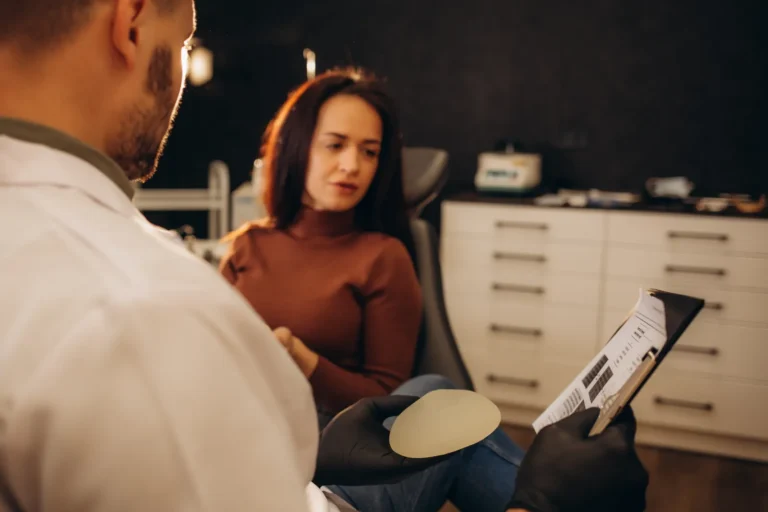
A breast lift (mastopexy) fixes shape and position. The surgeon removes excess skin, raises the nipple and areola, reshapes your own tissue and makes the breast firmer. Volume stays about the same, and the breast can even look slightly smaller.
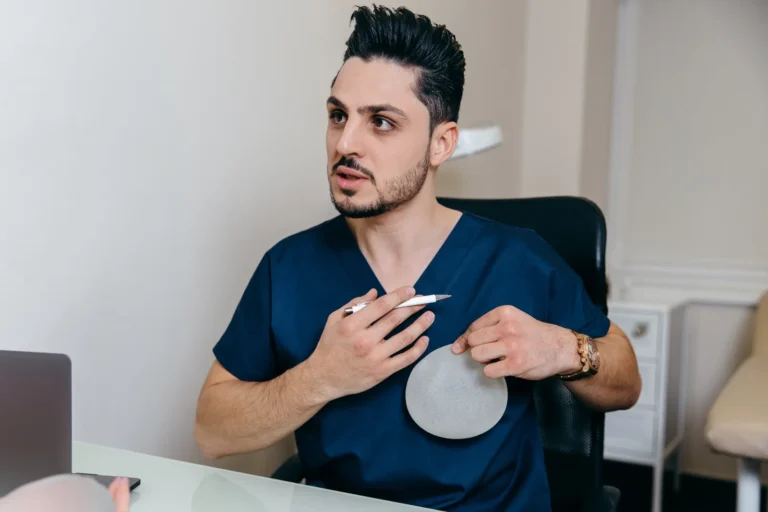
Implants fix volume. If sagging is significant, an implant alone will not lift the breast. It simply sits under the drooping tissue, which can create a “double bubble” look. That is why, with noticeable sagging, augmentation is usually combined with a lift.
Breast lift without implants: who it suits
A lift on its own works well if:
- you like your current size and do not want to go bigger;
- you have enough breast tissue to create a pleasing shape;
- you would rather avoid implants and the follow-up scans and possible replacements they involve;
- you are happy with a natural upper breast rather than the rounder fullness an implant gives.
Some surgeons add a small amount of your own fat (fat transfer) to soften and slightly fill the upper breast. It suits people who want a little extra without implants, but what it can achieve is limited.
Breast lift with implants: when it makes sense
Combining a lift with an implant (augmentation-mastopexy) is chosen when the breast has both dropped and visibly deflated after breastfeeding. The implant restores upper fullness, while the lift repositions the nipple and removes extra skin.
This is technically more demanding, because the surgeon is adding volume and tightening the skin envelope at the same time. The chance of needing a revision is a little higher than with either operation alone. Some surgeons prefer a staged approach, lift first and implant a few months later or the reverse, depending on your tissues.
Which option fits your situation?
| Your situation | Usually suggested |
|---|---|
| Happy with size, breasts have dropped | Breast lift without implants |
| Small, deflated breasts with minimal sagging | Implants without a lift |
| Breasts have dropped and lost volume | Lift with implants, in one stage or two |
| Large, heavy breasts that sag | Breast reduction (which includes a lift) |
| Want a little volume without implants | Lift with fat transfer |
The table is only a starting point. Your surgeon decides the final plan after assessing nipple position, tissue thickness, skin quality and your goals.
Incisions and scars
The type of lift depends on how much sagging there is:
- Periareolar: a scar around the areola only, for mild sagging.
- Vertical (“lollipop”): around the areola and straight down, for moderate sagging and the most common choice.
- Anchor (inverted-T): adds a horizontal scar in the breast fold, for significant sagging and lots of excess skin.
A lift always leaves scars. They are pink and firm for the first months, then gradually fade over about a year. Look at real before-and-after photos and talk about scars openly before surgery.
How long does a breast lift last?
A lift gives a long-lasting result, but it does not stop time. Skin keeps ageing and gravity still works, so some settling over the years is normal. Surgeons generally describe results that patients enjoy for many years, but nobody can promise an exact number.
What affects longevity:
- future pregnancies and breastfeeding;
- big swings in weight;
- skin quality, elasticity and smoking;
- implant size, since heavier implants stretch tissue more;
- wearing supportive bras and caring for your skin.
That is why surgeons usually recommend a lift once you have finished having children. A later pregnancy can undo part of the result.
Breast lift after breastfeeding: when is the right time?
Most surgeons advise waiting at least 3–6 months after you stop breastfeeding, and some prefer longer, so the breasts fully settle and any remaining milk production stops. Your weight should be stable too.
If you have recently weaned, you can still book an online consultation now. A surgeon can review your photos and tell you when it makes sense to plan the trip.
Breast lift after implant removal
Some patients decide to remove older implants (explant surgery). Afterwards, especially when large implants have been in for many years, the skin is often stretched and the breasts look low and empty.
A surgeon may suggest a lift at the same time as implant removal, or as a second stage a few months later once the tissues have recovered. Fat transfer is sometimes added. The choice depends on your tissues, the capsule around the old implant and what you want.
Risks to understand before surgery
A breast lift is a well-established operation, but no surgery is risk-free. Your surgeon should discuss:
- visible or widened scars, especially if you tend to scar thickly;
- temporary or lasting changes in nipple sensation;
- asymmetry in shape or nipple position;
- slow healing where incisions meet, particularly in smokers;
- bleeding, infection and anaesthetic complications;
- with implants: capsular contracture, implant displacement and the need for revision.
Breastfeeding after a lift is often possible but cannot be guaranteed.
Recovery and planning your stay in Yerevan
The operation is done under general anaesthesia and usually takes 2–3 hours, sometimes longer with implants. The first days bring swelling and tightness, managed with pain relief. A support bra is worn for about 4–6 weeks; most people return to desk work in 1–2 weeks and to exercise at around 6 weeks.
For parents of young children, plan help at home: lifting a toddler is usually off-limits for the first 2–3 weeks. Sleep on your back, propped up, and don’t lift heavy bags or your suitcase on the way home.
Plan about 8–10 days in Yerevan for tests, surgery, a night in the clinic, dressing changes and check-ups. Flying home is typically possible after 7–10 days, but your surgeon decides. Back home, follow up with a local doctor and stay in touch with your surgeon remotely.
On cost: according to the aggregator Clinics on Call (2024), breast augmentation in Armenia generally runs about $3,000–5,000. A lift, especially combined with implants, is priced separately based on technique, operating time, implants and your package, so your figure comes from a personal estimate. See our mammoplasty page, or the mommy makeover page if you are considering a combined post-pregnancy plan.
Frequently asked questions
Can I get a breast lift without implants?
Yes, if you are happy with your size and have enough tissue. Your breasts will sit higher and look firmer, but not bigger.
Lift or implants after having kids: which is better?
It depends on what changed. Sagging needs a lift, lost volume needs implants, and when both happened they are often combined.
How long does a breast lift last?
Results typically last many years, but skin keeps ageing. Pregnancy and weight changes can affect the outcome.
How long after breastfeeding can I have a breast lift?
Usually at least 3–6 months after you stop, with a stable weight. Your surgeon will confirm the timing.
Can I have a lift when my implants are removed?
Often yes, either in the same operation or a few months later. The surgeon decides based on your tissues.
Not sure whether you need a lift, implants or both? Send us your photos and questions via the contact page, and we will arrange a free online consultation with a surgeon in Yerevan and a personal estimate.
This article is for general information and does not replace a consultation with a qualified doctor.
Medical information notice
This article is general information for planning purposes and does not replace advice from a qualified medical professional.