Breast augmentation: implants or fat transfer, which is right for you?
Implants or your own fat? How each type of breast augmentation works, how much bigger you can go, how long fat transfer lasts and what drives the cost.
Breast augmentation can be done in two main ways: with implants or with your own fat (fat transfer, also called fat grafting or lipofilling). Most people who contact us have already read a bit about both and are stuck on the same questions. How much bigger can fat make me? Does it last? And is it cheaper than implants?
This guide walks through how each method works, what results are realistic, the main risks, what drives the cost, and how to plan surgery if you are travelling to Yerevan for it.
What are the 2 types of breast augmentation?
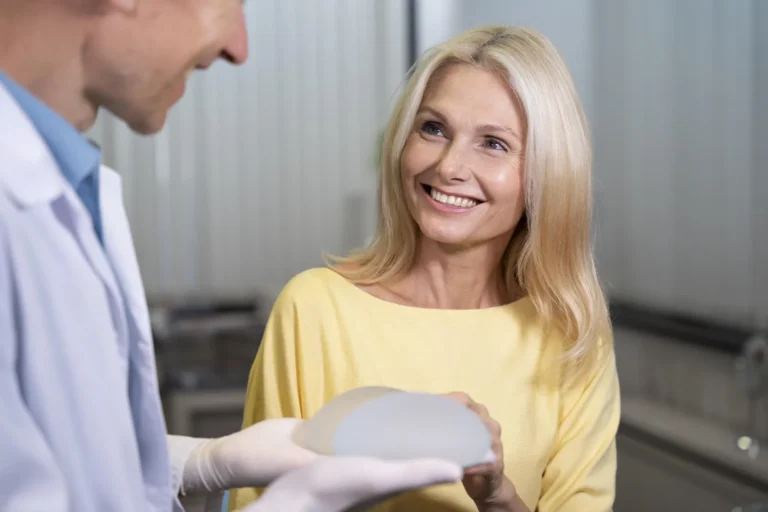
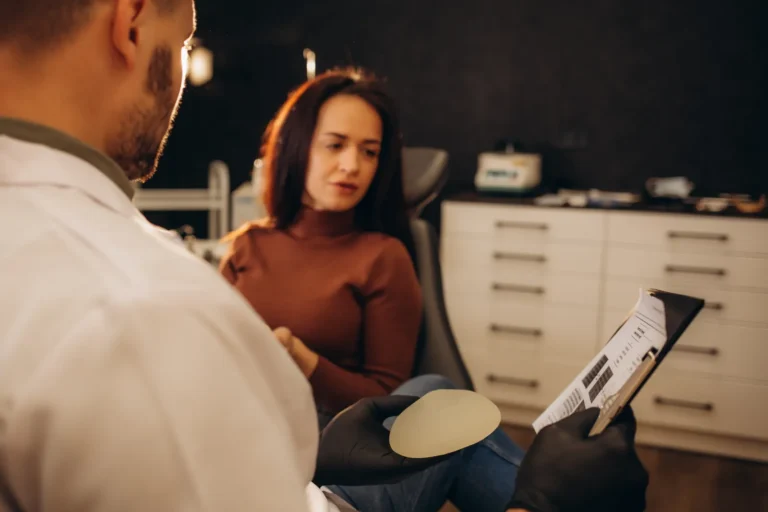
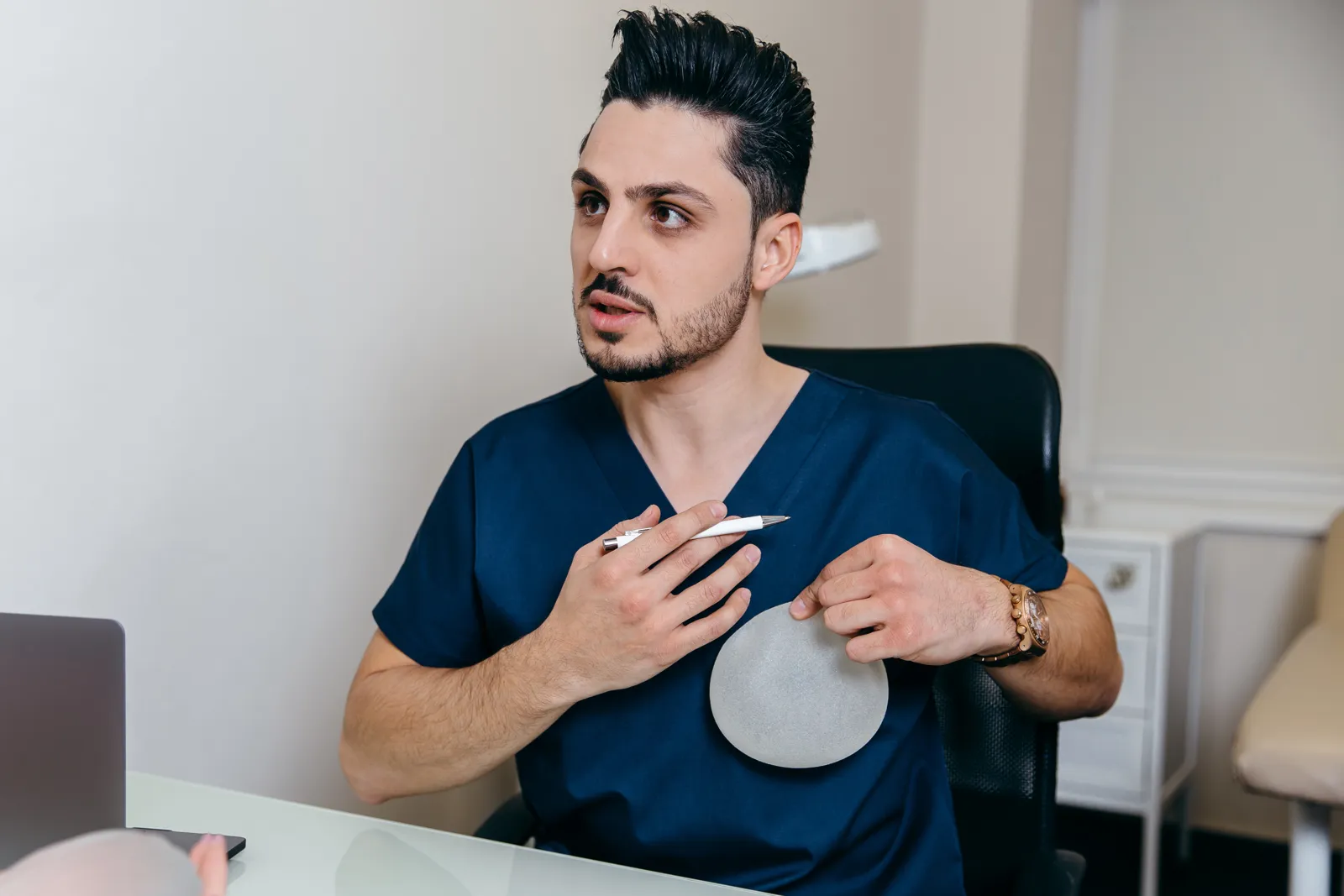
Put simply, a surgeon has two tools. The first is a breast implant, usually silicone gel, sometimes saline, placed either behind the breast tissue or partly behind the chest muscle. The second is your own fat, taken by liposuction from the tummy, flanks or thighs, processed, and injected into the breast in tiny amounts.
There is also a combined approach, often called hybrid or composite augmentation. The implant provides most of the volume and a thin layer of fat softens the edges, which can help very slim patients whose implant might otherwise be visible. It is less common, but worth knowing it exists.
How does breast augmentation with implants work?
Implant surgery is done under general anaesthesia and typically takes 1–2 hours. The surgeon usually makes an incision in the fold under the breast (less often around the edge of the areola or in the armpit), creates a pocket and places an implant chosen in advance for size and shape.
The big advantage is predictability. You choose the volume with your surgeon during consultation and sizing, and that volume does not get absorbed. Depending on your tissues and frame, an increase of one, two or more cup sizes is possible.
The trade-offs, honestly stated:
- implants are not lifetime devices, and further surgery may be needed at some point;
- capsular contracture can occur, when scar tissue around the implant tightens and the breast feels firm;
- in very slim patients, implant edges or rippling may be felt or seen;
- with silicone implants, periodic imaging (ultrasound or MRI) is recommended to detect a “silent” rupture.
How does fat transfer breast augmentation work?
Augmentation with fat sounds appealing: no foreign material, plus a little contouring where the fat is taken from. It is one operation with two stages. First, liposuction of the donor area. Then the purified fat is injected into the breast through fine cannulas in many small threads.
Fat has to be placed in thin layers so each droplet can pick up a blood supply and survive. That is why a surgeon cannot simply inject as much as you would like in one go. Overfilled tissue nourishes the graft poorly, and the fat that does not survive can turn into firm lumps.
Fat transfer tends to suit:
- people who want a modest, natural-looking increase of around one cup size;
- people with enough spare fat in donor areas (very slim patients may not have enough);
- correcting asymmetry or small contour irregularities;
- patients who are open to a second session if they want more volume.
How long does fat transfer to the breast last?
This is the most common question, and the honest answer has two parts. In the first months, some of the transferred fat is reabsorbed. Studies report different figures, but on average roughly half survives, and the number varies with technique and the individual. Surgeons often place a little extra to allow for this.
The result is usually assessed at around 3–6 months. Fat that has survived by then is considered stable: it is living fat tissue and behaves like the rest of your body fat. Lose a few kilos and your breasts may become slightly smaller; gain weight and they may grow.
So the result is long-lasting, but not frozen in time. It changes with weight, age and pregnancy, just like natural breasts.
How much bigger can each method make you?
Implants offer the wider range. Size is matched to your chest width, tissue thickness and skin elasticity. A good surgeon is more likely to talk you out of an oversized implant than into one, because heavy implants stretch tissues faster over time.
Fat transfer usually adds about one cup size per session, sometimes a little less. If you want more, a second session can be planned a few months later, or implants become the more practical option.
Implants vs fat transfer: side-by-side comparison
| Factor | Implants | Fat transfer |
|---|---|---|
| Volume increase | Wide range, predictable | Modest, usually up to about one cup per session |
| Predictability | High | Moderate, part of the fat is reabsorbed |
| Look and feel | Depends on implant and tissue cover | Very natural to the touch |
| Scars | Incision of about 4–5 cm, often in the breast fold | A few tiny entry points |
| Bonus effect | None | Slimmer donor area |
| Further surgery | Implant exchange may be needed years later | A second session may be needed for volume |
| Less suitable for | People who do not want any implant | Very slim patients or those wanting large volume |
In short: implants are chosen for volume and predictability, fat transfer for a natural feel and a modest change. The final choice is made by your surgeon after examining you, assessing your tissues and talking through your expectations.
Questions to ask your surgeon
An online consultation does not replace an in-person exam, but it helps you understand which direction makes sense. Write your questions down beforehand:
- What size increase is realistic for me with each method?
- Do I have enough fat for a transfer, and where would it come from?
- Which implants do you use, in what shape and with what surface?
- Above or below the muscle, and why in my case?
- How many days should I stay in Yerevan, and when can I fly?
- How will follow-up work once I am back home?
It is a good sign when a surgeon answers specifically, shows you options and does not promise a perfect, risk-free result.
Risks and limitations of both methods
Any breast surgery carries risks: bleeding or haematoma, infection, asymmetry, changes in nipple sensation and dissatisfaction with the result. Implants add capsular contracture, implant displacement and rupture. Surgeons also discuss a rare lymphoma linked mainly to textured implants (BIA-ALCL), which is one reason many now prefer smooth implants.
Fat transfer has its own issues. Some fat may not survive and can form lumps or oil cysts. Small calcifications can appear. An experienced radiologist can usually tell these apart from suspicious changes, but you should always mention the procedure before any mammogram. Before any breast surgery, especially over 35–40, your surgeon will usually ask for an ultrasound or mammogram.
Breast augmentation cost: implants vs fat transfer
According to the aggregator Clinics on Call (2024), breast augmentation in Armenia typically ranges from about $3,000 to $5,000. Treat that as rough orientation, not a quote: your actual figure comes from a personal estimate after consultation.
What drives the cost:
- the method (implants, fat transfer or a combination);
- for implants: the brand and type;
- for fat transfer: the number of donor areas and the amount of liposuction;
- anaesthesia time and length of hospital stay;
- compression garments, tests and follow-up visits;
- accommodation, transfers and an interpreter if you choose a package.
Fat transfer is not automatically cheaper. Because it includes liposuction, it can cost about the same as implants, and a second session adds to the total.
Recovery and planning your trip to Yerevan
After implants, the first 2–3 days usually feel tight and heavy, especially with implants under the muscle. Prescribed pain relief generally keeps this manageable. A support bra is worn for about 4–6 weeks, and most people return to exercise and heavy lifting at around 6 weeks.
After fat transfer, the breasts tend to be less sore, but the donor area feels like it has had liposuction: swelling, bruising and a compression garment. You should avoid pressure on the breasts, so sleeping on your back is best at first.
A practical trip plan:
- Online consultation: send photos, your goals and questions about the method.
- Arrive in Yerevan for the in-person exam, blood tests and breast ultrasound.
- Surgery, usually with one night in the clinic.
- Check-ups. Plan on around 7–10 days in Yerevan in total.
- Flight home, typically 5–10 days after surgery; your surgeon decides the exact timing.
- At home: follow-up with a local doctor plus remote check-ins with your surgeon by photo.
Read more about the operation itself on our mammoplasty page, and see what we organise for you on the services page.
Frequently asked questions
How long does fat transfer breast augmentation last?
Fat that has survived at 3–6 months tends to stay long term, like normal fat tissue. Its volume will still change with your weight and age.
Can fat transfer increase my breasts by two cup sizes?
In a single session that is unlikely; around one cup is more typical. For more volume, surgeons plan a second session or discuss implants.
Which is safer, implants or fat transfer?
No surgery is risk-free, and each method has its own complications. What matters most is matching the method to your anatomy, a qualified surgeon and careful aftercare.
Does fat grafting affect mammograms?
It can leave small lumps or calcifications. Experienced radiologists can usually recognise them, but always tell them you have had fat grafting.
Do implants need to be replaced after 10 years?
There is no fixed expiry date. Implants are replaced if there is a complication or the breast shape changes, and regular checks help catch problems early.
Not sure which option fits you? Send us your photos and questions through the contact page, and we will arrange a free online consultation with a surgeon in Yerevan and a personal estimate.
This article is for general information and does not replace a consultation with a qualified doctor.
Medical information notice
This article is general information for planning purposes and does not replace advice from a qualified medical professional.