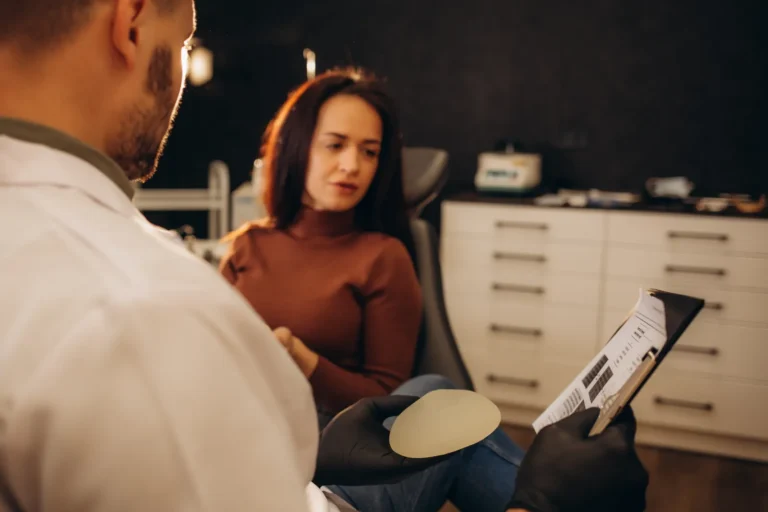
Tummy tuck after pregnancy: diastasis, C-section, recovery and scar

When a tummy tuck after pregnancy makes sense, how it works after a C-section, how much time off you need and what to expect from the scar and belly button.
A tummy tuck after pregnancy is something many women think about quietly for a long time. Your child is at nursery or school, your weight came back down ages ago, yet your stomach still doesn’t feel like yours: soft, with an overhang of skin, sometimes a bulge down the middle that no amount of planks will flatten. If that sounds familiar, you’re far from alone, and it isn’t a willpower problem.
This guide covers diastasis recti, when a tummy tuck after pregnancy makes sense, tummy tucks after a C-section, how much time off work you’ll need, what happens to your belly button and what the scar really looks like. We also explain how to plan surgery in Yerevan when you have children waiting at home.
What a post-pregnancy tummy tuck involves
The medical name is abdominoplasty. During the operation the surgeon:
- removes stretched skin and fat from the lower abdomen;
- repairs separated abdominal muscles (diastasis recti) where needed, restoring the “inner corset”;
- brings the belly button out through a new opening;
- often adds liposuction of the flanks for a smoother waist.
When a tummy tuck is combined with breast surgery, the combination is usually called a mommy makeover. Here we focus on the abdomen.
Diastasis recti: when exercise helps and when surgery does
During pregnancy, the two vertical abdominal muscles separate along the midline to make room for the growing uterus. For many women the gap narrows on its own after birth. For others it stays, and the belly pushes forward, especially when you tense your core or by the end of the day.
Mild diastasis often responds well to work with a women’s health physiotherapist focused on deep core muscles and breathing, and that’s usually the right place to start. If the bulge persists after a year of consistent work and loose skin remains, surgical muscle repair during a tummy tuck gives a more reliable result. Your surgeon assesses the separation in person, sometimes with an ultrasound.
When is the right time after pregnancy?
There’s no prize for rushing. Your body needs time to recover and your weight and hormones need to settle. Surgeons commonly look for:
- at least 6 to 12 months since giving birth;
- a few months since you stopped breastfeeding;
- a weight that has been stable for several months, close to your goal;
- no plans for further pregnancies, since another pregnancy can stretch the skin and muscles again.
Your surgeon decides the exact timing for you after consultation and tests.
Tummy tuck after a C-section
A previous C-section isn’t a barrier. In fact, the tummy tuck incision usually runs in the same low area, so the old C-section scar is often removed along with the excess skin. The “shelf” of skin that tends to hang over a C-section scar goes too, and many women find the new scar neater than the old one.
Your C-section should be well healed, typically at least 6 to 12 months before surgery. Tell your surgeon about every abdominal operation you’ve had, as it affects planning.
How the operation goes
A tummy tuck is performed under general anaesthesia and usually takes 2 to 4 hours, longer when combined with other procedures. The incision is placed low, above the pubic area and roughly from hip to hip, so it sits under underwear or a bikini. You wake up in an abdominal binder, sometimes with drains, and usually stay 1 to 2 nights in the clinic.
Is it painful? An honest look at the first days
You won’t feel anything during surgery. Afterwards there is pain, and it’s stronger when the muscles have been repaired. Many women compare it to recovering from a C-section or an extremely hard core workout. It’s managed with a pain relief plan from your doctor, and it improves noticeably day by day.
For the first week you’ll walk slightly bent forward because the skin is tight. Sleeping semi-upright with a pillow under your knees is most comfortable. Walking from the first day matters: it’s one of the main ways to prevent blood clots.
Recovery timeline and how long off work
| When | What to expect |
|---|---|
| Days 1–3 | Clinic stay, binder, possible drains, walking from day one |
| Week 1 | Pain easing, standing straighter, dressing checks |
| Days 10–14 | Stitch removal or wound check; flying home is usually allowed |
| Weeks 2–3 | Most people return to desk work |
| Week 6 | Binder usually stops; moderate lifting, including your child, often allowed |
| Weeks 6–8 | Gradual return to exercise, as agreed with your surgeon |
| 3–6 months | Swelling settles and the shape stabilises |
| 12–18 months | The scar matures, softens and fades |
If your job is physical, expect to need closer to 4 to 6 weeks off. For parents of small children, the real limit is lifting: plan for help with carrying, bathing and car seats for about 6 weeks.
What happens to the belly button?
In a full tummy tuck, your belly button stays attached to its original stalk. The skin above is pulled down, and the surgeon creates a new opening to bring the navel through in a natural position. This leaves a small scar around the belly button, which usually becomes hard to notice once healed. A good surgeon pays a lot of attention to its shape, because a natural-looking navel makes a big difference to the overall result.
In a mini tummy tuck, the belly button is usually left as it is, which is one reason a mini only suits limited cases.
The scar: what to expect
A scar is unavoidable, and it’s important to accept that before surgery. It sits low, usually within your underwear or bikini line, and its length depends on how much loose skin there is. It’s pink or red for the first months, then gradually fades. Silicone sheets or gel, if your surgeon recommends them, and strict sun protection for at least a year help it settle.
How to prepare
- Tests: blood tests, clotting profile, infection screening, ECG and a medical review. Your clinic gives you the list, and much of it can be done in Yerevan.
- Stop smoking: nicotine reduces blood flow to the skin and raises the risk of wound healing problems. Stop several weeks before and after.
- Medications: review everything with your doctor, including hormonal contraception, aspirin and supplements.
- Stable weight: avoid crash diets right before surgery.
- Help at home: line up support for childcare, cooking and school runs for at least 2 to 4 weeks after you return. For mums this is often the most important item.
- Packing: loose high-waisted clothes, slip-on shoes, a small pillow for car rides, absorbent pads.
Risks to understand
This is a significant operation. Possible complications include seroma (fluid collection, sometimes needing drainage), wound healing problems, especially in smokers, infection, a wide or visible scar, asymmetry and temporary numbness below the navel. Blood clot prevention gets special attention: early walking, compression stockings and sometimes blood-thinning injections. An experienced surgeon and careful aftercare reduce these risks but cannot remove them.
Tummy tuck in Yerevan: how long to stay
Plan around 10 to 14 days in Yerevan: consultation and tests, surgery, 1 to 2 nights in the clinic, dressing changes and a final check. Flying home is usually allowed after 10 to 14 days, but your surgeon decides. On the plane, wear compression, drink water and walk every hour. Back home, keep wearing your binder as instructed, see your local doctor if anything worries you, and send photos to your Yerevan surgeon through the remote check-ins we arrange.
Tummy tuck cost in Armenia
An aggregator, Clinics on Call (2024), lists tummy tucks in Armenia at roughly $3,500 to $5,000. Treat this as rough orientation. Your price depends on full vs mini, muscle repair, added liposuction, anaesthesia, nights in the clinic and your package. You get the exact figure in a personal estimate. Read more on our tummy tuck page or, if you’re also considering breast surgery, our mommy makeover page.
Frequently asked questions
How soon after pregnancy can I have a tummy tuck?
Usually at least 6 to 12 months after giving birth and a few months after you stop breastfeeding, with a stable weight.
Can I have a tummy tuck after a C-section?
Yes. The tummy tuck incision is usually placed in the same area, and the old C-section scar is often removed with the excess skin.
How long will I need off work?
Most people with desk jobs return after 2 to 3 weeks. Physical jobs and lifting small children usually need closer to 6 weeks.
Can I get pregnant after a tummy tuck?
Yes, but pregnancy can stretch the skin and muscles again. Surgeons usually recommend waiting until your family is complete.
Will my belly button look natural?
In most cases, yes. The navel stays on its original stalk and is brought through a new opening, leaving a small scar that usually fades well.
Send us photos of your abdomen from the front, side and leaning forward, along with your height, weight and when you last gave birth. We’ll arrange a free online consultation with a surgeon in Yerevan and prepare a personal estimate. Reach us on our contact page.
This article is for general information and does not replace a consultation with a qualified doctor.
Medical information notice
This article is general information for planning purposes and does not replace advice from a qualified medical professional.