Revision rhinoplasty: when to have it, grafts and choosing a surgeon
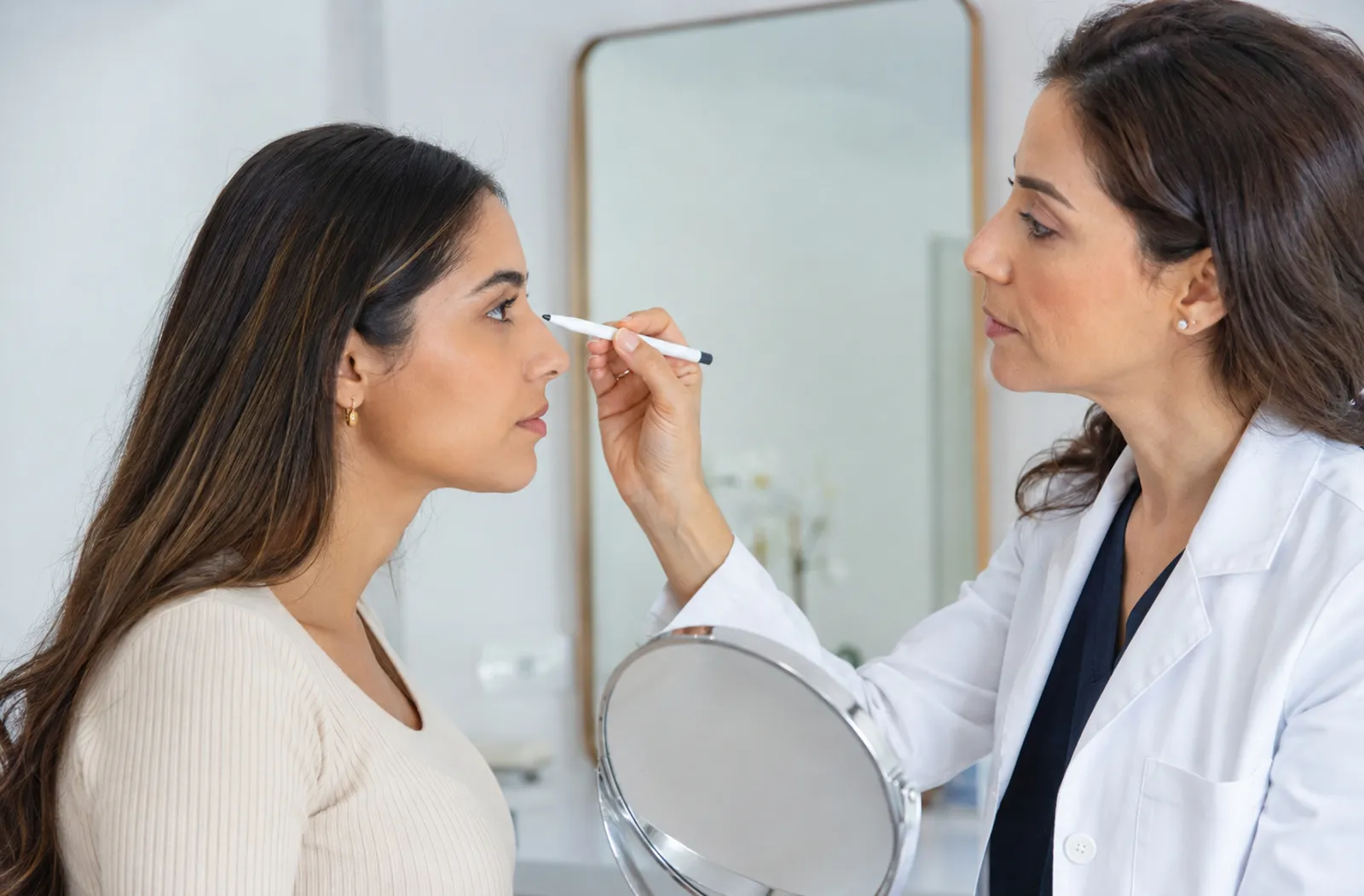
When to have a secondary rhinoplasty, which grafts are used and how to choose a surgeon with real revision experience.
Revision rhinoplasty, also called secondary rhinoplasty, is surgery to correct the result of a previous nose job, whether for appearance, breathing or both. It is more demanding than a first rhinoplasty: there is internal scar tissue, cartilage may be missing and the skin has changed. That is why three things matter most: waiting long enough, choosing a surgeon with real revision experience and keeping expectations realistic. Here is when to consider it, which techniques are used, what the healing timeline looks like and how to plan it in Yerevan, Armenia.
When can you have revision rhinoplasty?
The general rule is to wait at least 12 months after your previous operation, and sometimes longer with thick skin. During that time swelling keeps settling and the nose keeps changing: something that looks wrong today may improve on its own, and operating on tissue that is still swollen makes the outcome less predictable.
Use this waiting period well. Keep a photo diary every few months in the same light and angles, note any breathing issues (one side blocked, worse at night or during exercise) and collect your previous medical records. When you finally see a revision surgeon, this information makes the consultation far more useful than a single recent selfie.
There are exceptions. A significant breathing problem or a specific complication may justify earlier surgery. Either way, the decision should follow a proper examination, not photos alone.
Common reasons for revision nose surgery
The problems that most often lead to a revision include:
- An irregular bridge or a residual hump.
- A saddle nose from over-reduction of the bridge or septum.
- Pollybeak deformity, where the area just above the tip is too full.
- Tip problems: asymmetric, drooping, over-rotated or pinched.
- A crooked nose that persisted or returned.
- Breathing difficulty from nasal valve collapse or a deviated septum.
Sometimes the issue is minor and can be fixed with a small touch-up, occasionally under local anaesthesia. In other cases much of the structure has to be rebuilt.
Revision rhinoplasty with cartilage grafts
In a first rhinoplasty, surgeons usually take septal cartilage for support. In a revision, that cartilage has often already been used or is not enough, so another source is needed:
| Graft source | Advantages | Things to consider |
|---|---|---|
| Septum | Straight and easy to shape | Often already used |
| Ear (concha) | Hidden scar, good for the tip | Curved and softer, limited structural support |
| Your own rib | Plenty of material, strong support | Small chest scar, longer operation |
| Donor rib | No second surgical site | Availability varies by clinic |
Most complex revisions are done through an open approach, which lets the surgeon see exactly what the previous operation changed. You can read more about the procedure on our rhinoplasty page.
How to choose a revision rhinoplasty surgeon
Experience matters here more than in almost any other cosmetic operation. When assessing a surgeon:
- Ask how many revisions they perform and look at before and after photos of cases like yours.
- Check that they assess your breathing, not just the appearance.
- Value a surgeon who explains clearly what can and cannot be improved.
- Be wary of anyone who promises a perfect nose or plays down the risks.
Bring the operative report from your first surgery if you have it, and photos from before that operation. Both help the surgeon understand which structures are missing.
Revision rhinoplasty healing stages and expectations
The revision rhinoplasty healing timeline is similar to a first rhinoplasty but usually longer. Scarred skin swells more and takes longer to drape over the new framework:
- First week: swelling, possible bruising and a splint.
- 2 to 4 weeks: most visible swelling settles.
- 12 to 18 months: the tip continues to refine, sometimes longer with thick skin.
- If rib cartilage was used, some chest discomfort for a few weeks.
Risks are those of any rhinoplasty (bleeding, infection, breathing changes, asymmetry, temporary numbness) plus some specific to revisions: scarred skin adapts less well, grafts can become visible or shift over time, and rib cartilage may warp slightly in the following months. Experienced surgeons use techniques to reduce these issues but cannot eliminate them.
The realistic goal is a clear improvement, not perfection. The chance of needing another touch-up is higher than after a primary rhinoplasty, and a good surgeon will say so openly.
Revision rhinoplasty in Yerevan
To start, send front, profile and base-view photos, the report from your previous operation and a description of what bothers you, including breathing. A surgeon in Yerevan gives you an initial opinion online, and the final plan is made at the in-person consultation.
Plan on 7 to 10 days in Yerevan, until the splint is removed and you have had a check-up; your surgeon decides when you can fly. Revision rhinoplasty usually costs more than a primary operation because it takes longer and may require grafts, so the figure can only come from a personal estimate. Medarmenia coordinates transfers, accommodation and an interpreter, and keeps in touch for remote follow-ups once you are home.
Frequently asked questions
How long should I wait before a second rhinoplasty?
Usually at least 12 months after your previous operation. Before that, residual swelling makes it hard to judge the result properly.
Is revision rhinoplasty harder than a first nose job?
Yes. Scar tissue, less available cartilage and less elastic skin make it more demanding, so choose a surgeon experienced in revisions.
Do I always need rib cartilage?
No. It depends on how much support is missing. Smaller revisions can often use septal or ear cartilage.
Can only the tip be corrected?
Yes, if the problem is limited to the tip, the revision can focus on it. Your surgeon decides after examining you.
How much does revision rhinoplasty cost?
It is generally more expensive than a primary rhinoplasty because it is longer and may need grafts. We prepare a personal estimate after your online consultation.
Unhappy with a previous nose job? Send your photos and reports through our contact page and we will arrange a free online consultation with a surgeon in Yerevan, plus a personal estimate.
This article is for general information and does not replace a consultation with a qualified doctor.
Medical information notice
This article is general information for planning purposes and does not replace advice from a qualified medical professional.