All-on-4 dental implants: teeth in a day, All-on-6 and trips to Yerevan
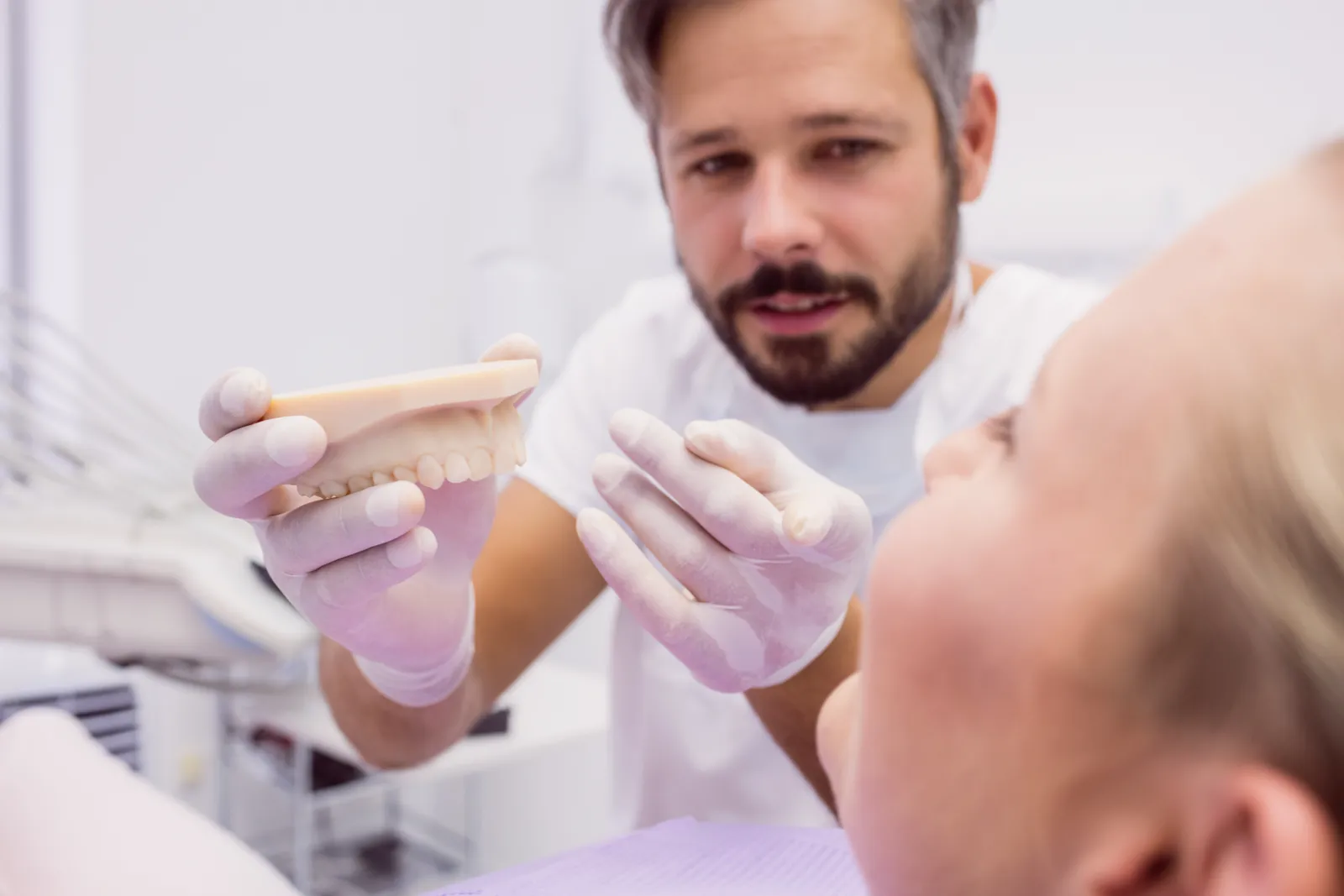
How All-on-4 dental implants work, who is a candidate, how they compare with All-on-6, and how treatment in Yerevan usually fits into two trips.
All-on-4 dental implants replace a full arch of teeth with a fixed bridge supported by just four implants. If your bone allows it, you leave the clinic with fixed temporary teeth within one to three days instead of a removable denture, which is why it is often marketed as “teeth in a day”. All-on-6 uses the same idea with six implants. Below we explain how it works, who suits it, how healing goes, what drives the cost and how patients usually plan treatment in Yerevan, Armenia, across two trips.
How do All-on-4 dental implants work?
Instead of one implant per missing tooth, the surgeon places four implants in carefully chosen positions and screws a full bridge of 10 to 14 teeth onto them. The two front implants go in straight. The two back implants are tilted, often by around 30 to 45 degrees, so they can use the bone that is there and avoid the sinus in the upper jaw or the nerve in the lower jaw.
That tilt is the reason many people with moderate bone loss can skip a bone graft. Not everyone, though. A cone beam CT scan and the surgeon’s assessment decide.
“Teeth in a day” refers to immediate loading. When the implants are firmly anchored at placement (good primary stability), a provisional bridge is fixed within about 24 to 72 hours. If stability is not good enough, a careful surgeon may choose to wait. That is sound judgement, not a failure.
All-on-4 vs All-on-6: which is better?
Neither is better for everyone. More implants spread the chewing load and leave a margin if one fails, but they need more bone and more surgery.
| Factor | All-on-4 | All-on-6 |
|---|---|---|
| Implants per arch | 4 | 6 |
| Bone needed | Less; useful with bone loss | More height and width |
| Load distribution | Good | Wider spread, more backup |
| Typical use | Lower jaw, upper jaw with limited bone | Upper jaw with good bone, heavy bite, grinding |
| Surgery time | Shorter | Somewhat longer |
| Cost | Fewer implants | More implants and parts |
Upper jaw bone tends to be softer, so many surgeons prefer five or six implants there when bone allows. In the lower jaw four are often enough. Your surgeon should decide from the scan, not from a fixed package.
Who is a good candidate, and who is not?
All-on-4 is usually considered if you have lost most teeth in an arch, if the remaining teeth have a poor outlook because of advanced gum disease, or if you are tired of a loose denture. Some situations call for extra caution or a different plan:
- Heavy smoking, which clearly raises the risk of implant failure.
- Poorly controlled diabetes.
- Bisphosphonates or other antiresorptive drugs, especially intravenous.
- Past radiotherapy to the head and neck.
- Severe grinding (bruxism): manageable with a night guard and sometimes more implants.
- Unwillingness to keep up a demanding daily cleaning routine.
Before travelling you can send a recent CT scan or panoramic X-ray plus photos. A specialist can then tell you whether All-on-4 looks realistic or another option fits better.
All-on-4 healing process and timeline
- Remote assessment: X-rays, photos, medical history and medication list.
- First clinic visit: examination, CT if needed, final plan and written estimate.
- Surgery: extractions if needed, removal of infection and implant placement under local anaesthesia, often with sedation.
- Temporary bridge: usually acrylic, screwed in within one to three days.
- Healing: about 3 to 6 months while bone fuses with the implants. Soft diet for the first weeks.
- Final bridge: acrylic on a metal frame, porcelain on metal or zirconia, depending on your case.
Expect swelling, soreness that painkillers control, and sometimes bruising for the first days. The main risks are an implant that fails to integrate, infection, peri-implantitis in the long term, and a cracked temporary if you bite hard food too soon.
All-on-4 in Yerevan: how many trips and how many days?
Most patients need two trips. The first, around 5 to 7 days, covers diagnosis, surgery, the temporary bridge and a check-up. The second, 3 to 6 months later and around 7 to 10 days, covers impressions, a try-in and fitting the final bridge.
Citizens of EU countries can currently enter Armenia without a visa for up to 180 days a year; other nationalities should check current entry rules. Flying a few days after implant surgery is usually fine if no sinus lift was done, but your surgeon confirms it.
Between trips your local dentist can check healing, and Medarmenia stays in touch with the clinic so questions get answered remotely. You can read more on our implants and veneers page.
All-on-4 dental implants cost: what drives the price
We will not quote a fixed figure without seeing your case. As a reference point, based on Yerevan clinics’ public price lists in early 2026, a single dental implant costs roughly 120,000 to 200,000 AMD, without the crown. A full-arch treatment depends on much more:
- Number of implants (4, 5 or 6) and the implant system.
- Extractions and treatment of infection.
- Any bone graft or sinus lift.
- Type of sedation.
- Material of the temporary and final bridge.
- Accommodation, transfers and interpreter across two trips.
Always ask for an itemised estimate showing what each trip includes and what warranty covers the bridge.
Frequently asked questions
How long do All-on-4 implants last?
Well-integrated implants can last many years with good hygiene and regular check-ups. The bridge itself usually needs maintenance or repairs over time, particularly if it is acrylic.
Is All-on-4 surgery painful?
You should not feel pain during surgery thanks to anaesthesia. Afterwards there is swelling and soreness for several days, managed with prescribed medication.
Can I eat normally with the temporary teeth?
Not quite. A soft diet is advised for the first weeks so the implants are not overloaded while they integrate. Your surgeon will tell you when to return to firmer food.
Can I take the bridge out to clean it?
No, it is screwed in and only your dentist removes it at check-ups. At home you clean it with a brush, a water flosser and interdental brushes.
I was told I have no bone. Is All-on-4 still possible?
Sometimes yes, thanks to tilted implants; sometimes a graft or another technique is needed. Only a CT scan and a surgeon’s assessment can answer that.
If you would like to know whether you are a candidate, send your X-rays and a few photos through our contact page. We will arrange a free online consultation with a specialist in Yerevan and prepare a personal plan and estimate for both trips.
This article is for general information and does not replace a consultation with a qualified doctor.
Medical information notice
This article is general information for planning purposes and does not replace advice from a qualified medical professional.