Cataract surgery with multifocal lenses: freedom from reading glasses?
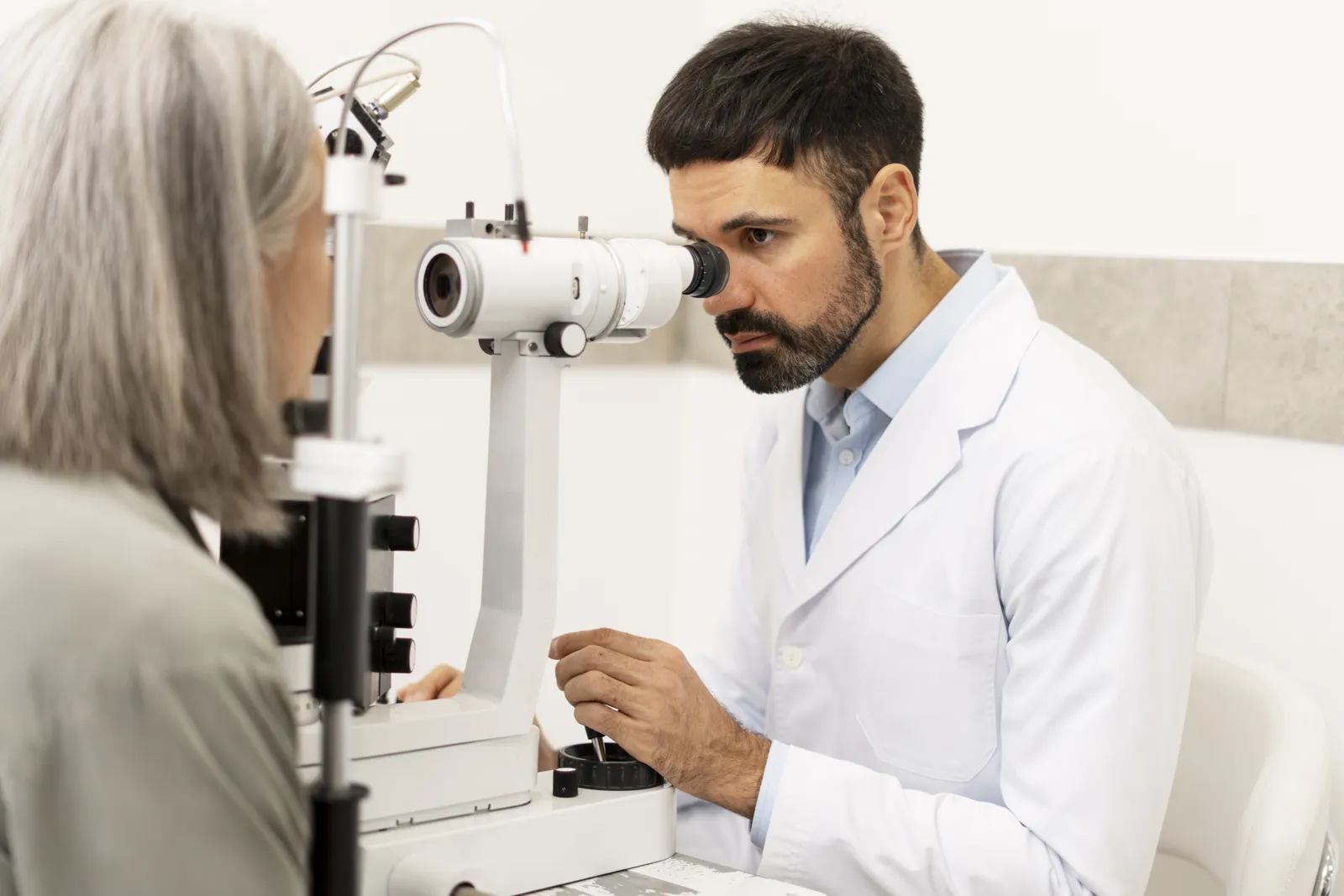
Monofocal, multifocal, trifocal or EDOF: how to choose a lens for cataract surgery or refractive lens exchange and rely less on glasses.
Cataract surgery with multifocal lenses replaces your cloudy natural lens with an artificial one that focuses at several distances, so many people can see far, intermediate and near with little or no need for glasses. The same operation on a lens that is still clear is called refractive lens exchange (RLE), or clear lens exchange, and is used for presbyopia and high long-sightedness. It isn’t right for everyone: for some eyes and lifestyles a monofocal lens is the better choice.
Here we explain lens types, who makes a good candidate and how the surgery is organised in Yerevan, Armenia.
What is a cataract and how is it removed?
A cataract is the gradual clouding of the eye’s natural lens. Vision becomes blurry, colours look faded and headlights cause glare. It is very common with age, and surgery is the only effective treatment.
The standard technique is phacoemulsification: through an incision of about 2–3 mm, the surgeon breaks up the lens with ultrasound, removes it and places a foldable intraocular lens in the capsule. It’s done under anaesthetic drops with light sedation, takes about 15–20 minutes per eye and doesn’t need an overnight stay. Some centres also use a femtosecond laser for certain steps.
Monofocal vs multifocal lens: which is better?
Choosing the lens is the key decision, and it depends on your eyes, work and expectations.
| Lens type | What it offers | Things to consider |
|---|---|---|
| Monofocal | Sharp vision at one distance, usually far | Reading glasses needed; fewer halos |
| Toric monofocal | Also corrects astigmatism | Still need reading glasses |
| Multifocal or trifocal | Far, intermediate and near | Night halos and glare, slightly less contrast |
| EDOF (extended depth of focus) | Good far and intermediate quality | Fewer halos, may need readers for small print |
| Monovision | One eye for distance, one for near, with monofocals | Must be tolerated; worth trialling with contact lenses first |
In many public health systems, including the NHS in the UK, cataract surgery uses a standard monofocal lens; multifocal and trifocal options are usually private. That’s one reason people compare options abroad.
Who is a good candidate for a multifocal lens?
- People whose eyes are otherwise healthy: no macular degeneration, active diabetic retinopathy or advanced glaucoma.
- A regular cornea, or astigmatism that can be corrected with a toric lens.
- Realistic expectations: you will likely see halos around lights at night, especially in the first months.
- A lifestyle that benefits from near vision without glasses: screens, reading, travel.
It may not be the best option if you drive a lot at night for work, need maximum sharpness in low light or are particularly demanding about visual quality. Your ophthalmologist weighs this with tests and an honest conversation.
Useful questions to ask your ophthalmologist:
- Which lens do you recommend for me, and why not the others?
- What will night halos be like in my case, and how long do they usually last?
- Which tests confirm that my macula and cornea are suitable?
- What happens if a small residual prescription remains after surgery?
- How many multifocal lens procedures does your team perform?
Refractive lens exchange: the same surgery without a cataract
Refractive lens exchange is the same operation on an eye without a cataract. It is mainly considered from around age 45–50 for people with presbyopia or high long-sightedness who want to be less dependent on glasses. A bonus: you’ll never develop a cataract in that eye. The downside: it is intraocular surgery on an eye that saw well with glasses, and in very short-sighted people it slightly raises the risk of retinal detachment. So it is assessed more cautiously than cataract surgery.
Cataract surgery recovery and risks
- First days: blurry vision that improves quickly, a gritty feeling, antibiotic and anti-inflammatory drops for a few weeks.
- First week: no eye rubbing, no eye make-up, dust or swimming; shower carefully.
- First months: with multifocal lenses the brain gradually adapts (neuroadaptation). Halos usually bother you less over time, although some may remain.
Main risks: inflammation, raised eye pressure, macular swelling, infection inside the eye (rare), retinal detachment, lens decentration and a small residual prescription that is sometimes fine-tuned with laser. Months or years later, the capsule behind the lens can turn hazy; this is treated with a quick outpatient YAG laser.
Cataract surgery in Yerevan: stay and follow-up
In Yerevan, ophthalmologists experienced in cataract and premium lens surgery perform these operations. The lens brands and models each clinic uses vary, and Medarmenia confirms them for you along with the tests included in your estimate.
- Length of stay: around a week if both eyes are done; the second eye is usually treated a few days after the first.
- Flying: generally possible after the next-day check if all is well, but your surgeon confirms.
- Back home: a one-month check with your local ophthalmologist or optometrist, bringing the surgical report and your lens implant card.
Cost depends mainly on the lens type, pre-operative tests and whether one or both eyes are treated. See what our coordination covers on the services page or browse other surgeries.
Frequently asked questions
Will I never need glasses with a multifocal lens?
Many people manage almost everything without glasses, but it can’t be guaranteed. Some still use them for very small print or in dim light.
Monofocal or multifocal for cataract surgery?
Monofocal gives the best quality at one distance with fewer halos; multifocal gives independence from glasses at the cost of some night-time effects. It depends on your eyes and priorities.
Are both eyes done on the same day?
Usually one eye is treated first and the other a few days to a couple of weeks later. This lets the surgeon check how the first eye heals.
Can a cataract come back?
No, the natural lens is removed. What can happen is capsule clouding, which is treated with a quick laser procedure.
Can a multifocal lens be exchanged if I don’t adapt?
In selected cases yes, but it is a more complex second operation. That’s why choosing carefully beforehand matters so much.
If you have a cataract or presbyopia and want to know which lens suits you, send us your latest eye reports. We’ll arrange an online consultation with an ophthalmologist and a personal, no-obligation estimate.
This article is for general information and does not replace a consultation with a qualified doctor.
Medical information notice
This article is general information for planning purposes and does not replace advice from a qualified medical professional.