ICL lens surgery: the alternative to laser for high myopia explained
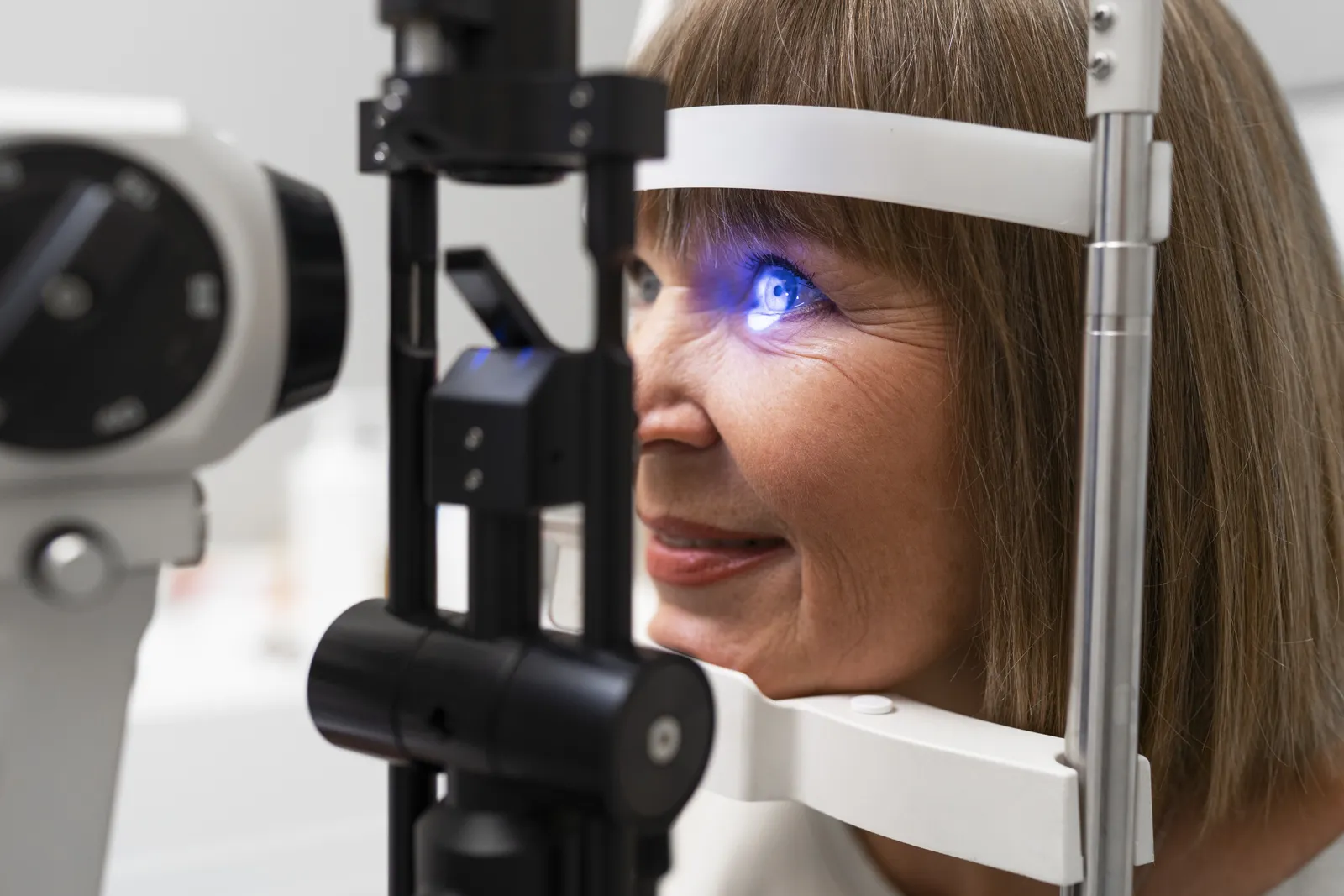
An ICL lens corrects high short-sightedness without reshaping the cornea. Who qualifies, how surgery and recovery work, and how it compares with LASIK.
An ICL lens (Implantable Collamer Lens) is a thin lens placed inside the eye, in front of your natural lens, without removing it. It is the main alternative to laser eye surgery when short-sightedness is high, the cornea is thin or laser isn’t considered safe. Nothing is cut away from the cornea, and the lens can be removed later if ever needed. Whether it suits you is always decided by an ophthalmologist after a full eye work-up.
If you’re considering eye surgery in Yerevan, Armenia, this guide covers what to ask and what to expect.
What is an ICL lens and how does it work?
The ICL is a soft, foldable lens made of collamer, a material designed to be compatible with the eye. It goes in through a tiny incision, unfolds and sits in the posterior chamber, behind the iris and in front of the natural lens. Think of it as a permanent contact lens, only inside the eye.
Current models have a small central port that lets fluid circulate, which in many cases removes the need for a preliminary laser opening in the iris. A toric version also corrects astigmatism.
Who is a good candidate for ICL surgery?
Generally, ophthalmologists consider people who meet these criteria, though each can be adjusted:
- Moderate to high myopia, often from around 6 dioptres up to very high prescriptions, with or without astigmatism.
- Age roughly 21 to 45, with a stable prescription for at least a year.
- A thin or irregular cornea, or stable keratoconus, that makes laser unsuitable.
- Enough space inside the eye (anterior chamber depth) and a healthy corneal endothelial cell count.
- No glaucoma, uveitis or cataract, and an otherwise healthy eye.
If you’re over 45, note that an ICL doesn’t correct presbyopia. You’ll probably need reading glasses over time, just like anyone without myopia.
ICL vs LASIK: which is better?
They don’t really compete: each fits a different kind of eye. The table sums up the usual differences.
| Factor | ICL | LASIK |
|---|---|---|
| How it corrects | Adds a lens inside the eye | Reshapes the cornea with a laser |
| Ideal prescription | Moderate to high myopia | Low to moderate myopia |
| Thin cornea | Often possible | Usually not advised |
| Reversible | Yes, lens can be removed or exchanged | No |
| Type of surgery | Intraocular, in theatre | On the eye’s surface |
| Dry eye | Less common | More common in early months |
| Cost | Higher (lens often custom-made) | Lower |
If your myopia is low and your cornea is suitable, laser is usually the simpler choice. If your myopia is high or your cornea won’t allow laser, an ICL often gives better visual quality than pushing laser to its limits.
ICL surgery and recovery timeline
- Assessment: corneal topography, anterior chamber measurement, endothelial cell count and retinal exam. The lens is calculated for you and often ordered, which can take days or weeks.
- Surgery: anaesthetic drops plus light sedation if needed. Usually 15–30 minutes per eye. Typically one eye is done first and the second a day or more later.
- First hours: blurry vision and a gritty feeling. Many people notice a clear improvement the next day.
- Check-ups: next day, one week and one month, then yearly for life.
For the first few weeks you’ll use prescribed drops, avoid rubbing your eyes, skip eye make-up for several days and stay out of pools and the sea for around two weeks, as advised. Many people return to desk work within a few days.
A practical tip before travelling: stop wearing soft contact lenses for several days to a week before your assessment (rigid lenses usually longer), because lenses change the cornea’s shape and distort the measurements. Your ophthalmologist will give you the exact timing. Pack sunglasses too, as eyes are light-sensitive at first.
ICL risks and possible problems
In experienced hands the procedure has a good safety record, but it is still surgery inside the eye. Risks to know about:
- Raised eye pressure, usually temporary and treatable.
- Halos or glare at night, mainly in the early months.
- Incorrect lens vault (too high or too low), which may require an exchange.
- Cataract formation in the long term, less common with current models.
- Loss of corneal endothelial cells, which is why regular checks matter.
- Infection inside the eye, rare but serious.
ICL surgery in Yerevan: stay, flying and follow-up at home
In Yerevan, ICL surgery is performed by ophthalmologists specialising in refractive surgery. Which lens models a clinic works with and how long a custom lens takes to arrive vary by centre, and Medarmenia confirms this for you before you book anything.
- Length of stay: plan on around a week if both eyes are treated, to cover next-day and one-week checks.
- Flying: many ophthalmologists allow flying a few days after surgery if checks are normal; your surgeon confirms.
- Back home: one-month and annual checks with your local optometrist or ophthalmologist, with the surgical report and lens model details.
On cost: it depends on the lens type (spherical or toric), whether it is custom-made, pre-operative tests and whether one or both eyes are treated. We provide a personal estimate after assessment. You can see the other procedures we coordinate on our surgeries page.
Frequently asked questions
Is an ICL lens permanent?
It is designed to stay in permanently but can be removed or exchanged if needed, for example if a cataract develops years later. That reversibility is one of its strengths.
Can people see or feel the ICL?
No. It sits behind the iris, so it isn’t visible from outside and you don’t feel it when you blink.
Does an ICL fix reading vision?
Standard ICLs don’t correct presbyopia. If you already need reading glasses, your ophthalmologist may discuss other options such as refractive lens exchange.
How long is ICL surgery recovery?
Vision improves a lot within a day or two and most people are back to normal life within a week. Full stabilisation and adapting to night lights can take a few weeks.
Can you get ICL with keratoconus?
In some cases, yes, if the keratoconus is stable and the eye meets the other criteria. The ophthalmologist decides after testing.
If you have high myopia and have been told laser isn’t for you, send us your latest eye test results. We’ll arrange an online consultation with an ophthalmologist and, if you’re a candidate, a personal estimate including the whole trip.
This article is for general information and does not replace a consultation with a qualified doctor.
Medical information notice
This article is general information for planning purposes and does not replace advice from a qualified medical professional.