CO2 laser resurfacing: results, recovery day by day and side effects
Fractional CO2 laser resurfacing improves wrinkles, texture and acne scars but comes with real downtime. What to expect, how many sessions and the risks.
CO2 laser resurfacing is one of the most effective ways to renew the skin: it improves fine and moderate wrinkles, sun damage, uneven texture and acne scars. The trade-off is real downtime of one to two weeks with redness, crusting and swelling, plus strict sun protection for months. It is not a lunchtime treatment. Here is what fractional CO2 treats, what recovery looks like day by day, the side effects to know about, and how to plan it if you are coming to Yerevan, Armenia.
What is fractional CO2 laser resurfacing and what does it treat?
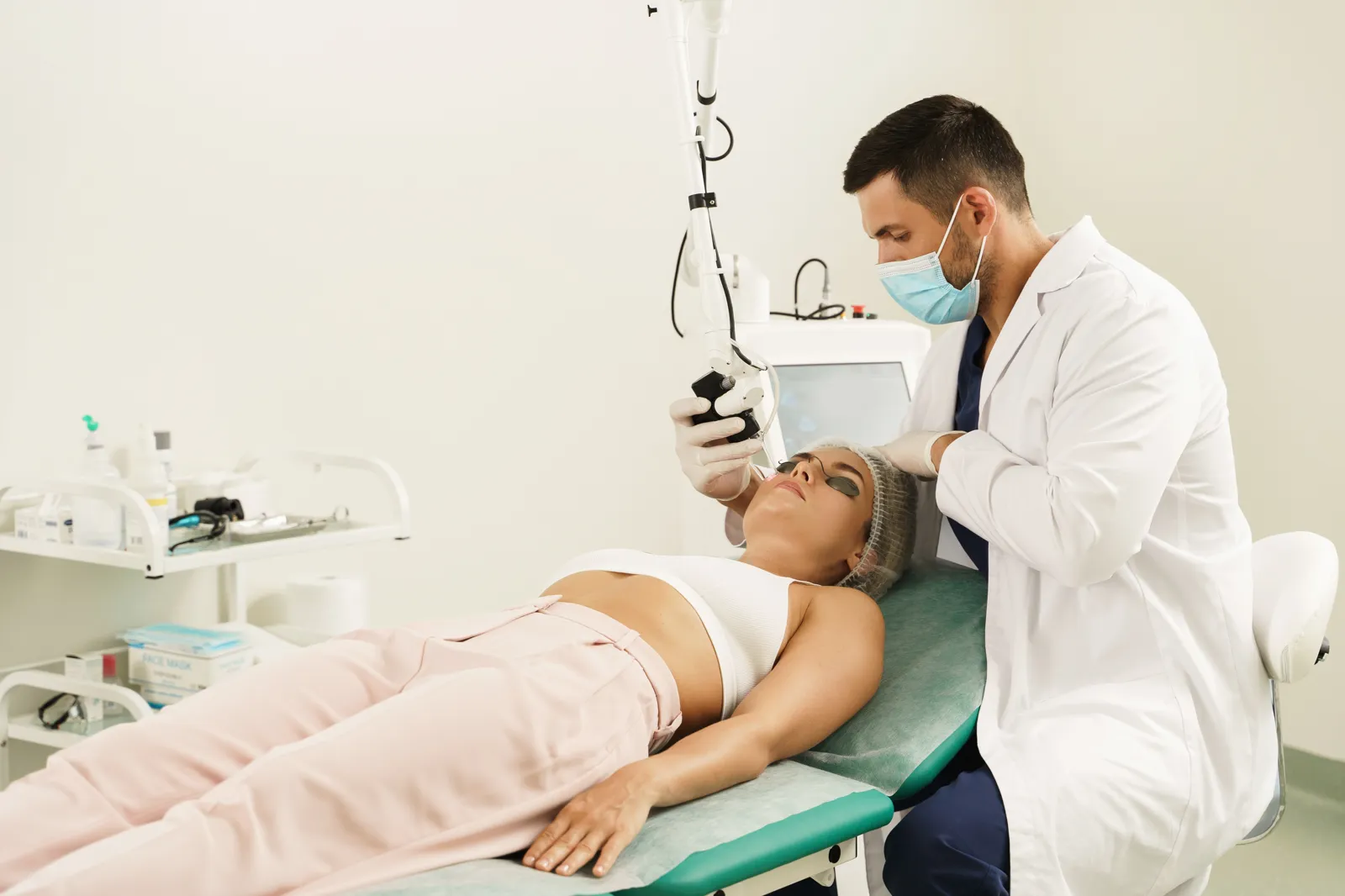
The CO2 laser uses a wavelength that water in the skin absorbs strongly, so it vaporises tissue in a controlled way. In the fractional version it treats thousands of microscopic columns rather than the whole surface, leaving bridges of untouched skin in between. That intact skin speeds healing, while the controlled injury stimulates collagen production for months.
Main uses include:
- Fine and moderate wrinkles, for example around the eyes and mouth.
- Sun damage, pigmentation and rough texture.
- Acne scars, especially depressed scars.
- Some surgical or traumatic scars.
- Stretch marks, with more limited results.
It does not replace surgery when there is significant sagging or excess skin: it improves skin quality, it does not reposition tissue. That is why it is sometimes combined with a facelift or eyelid surgery.
How many sessions will you need?
It depends on depth. A deeper treatment can give a marked result in a single session, with longer downtime. Lighter settings need 2 or 3 sessions spaced several weeks apart, with fewer days off. Acne scars often need more than one session. Your doctor chooses the settings based on your skin type and goals.
How does CO2 compare with other options? Erbium lasers are also ablative but usually gentler, with shorter downtime and a smaller effect. RF microneedling (such as Morpheus8) and chemical peels work on texture with less downtime but generally need more sessions for a milder change. CO2 sits at the stronger end: more downtime, more visible improvement per session.
CO2 laser resurfacing recovery day by day
Recovery depends on depth, but a typical course after a medium-depth facial treatment looks like this:
| When | What is normal |
|---|---|
| Days 1 to 3 | Strong redness, a sunburn-like feeling, swelling (especially eyelids), oozing |
| Days 3 to 7 | Fine crusting or darker skin that flakes off; itching |
| Days 7 to 14 | New pink skin; make-up usually allowed once your doctor says so |
| Weeks 2 to 12 | Redness gradually fades; skin is more sun-sensitive |
| Months 3 to 6 | Steady improvement in texture and lines as new collagen forms |
During the first week, aftercare is simple but important: gentle cleansing, a healing ointment and no picking at crusts. An antiviral is often prescribed if you have ever had cold sores.
CO2 laser side effects and downsides
CO2 laser is effective, but not risk-free. The most common side effects are prolonged redness, swelling, breakouts or milia and sensitivity. Others include:
- Post-inflammatory hyperpigmentation, more likely in darker or tanned skin.
- Hypopigmentation (lighter patches), which can appear late.
- Bacterial, viral (herpes) or fungal infection.
- Scarring, uncommon, more of a concern on the neck and chest with aggressive settings.
The practical downsides: several days of social downtime, months of sun avoidance and a result that takes time to show fully. The eyelids, neck and chest also heal more slowly and carry a higher scarring risk than the face, so they are treated with gentler settings.
Who should not have CO2 laser resurfacing?
It needs careful thought or postponing if you are pregnant, have an active infection in the area, a tendency to keloid scars, a fresh tan, or have recently taken isotretinoin; your doctor will decide how long to wait. Darker skin types can be treated, but with conservative settings and skin preparation beforehand.
Typical preparation includes:
- Avoiding sun and self-tan in the weeks before.
- Stopping retinoids and strong exfoliants a few days ahead, as your doctor advises.
- Mentioning any history of cold sores so an antiviral can be planned.
- Listing your medicines and any tendency to pigmentation.
CO2 laser in Yerevan: when to go and how long to stay
The best season for CO2 laser is autumn or winter, when sun exposure is lower. Summers in Yerevan are very sunny and hot, which is not ideal for freshly treated skin. Equipment varies by clinic, so Medarmenia checks which clinic offers it and who performs it.
For a medium or deep facial treatment, plan around 7 days in Yerevan, until the skin has re-surfaced and the doctor can check you. Flying with healing skin is possible, but carry your ointment, a cap and sunscreen, and keep your hands off your face. We arrange transfers, accommodation and an interpreter if needed.
Cost depends on the area (full face, around the eyes, neck), depth, number of sessions and whether it is combined with surgery, so we prepare a personal estimate. Once home, follow-up continues by photo and video call. See all options on our surgeries page.
Frequently asked questions
How long is CO2 laser recovery?
The crusting and intense redness phase usually lasts 5 to 10 days. Residual pinkness can last several weeks and can be covered with make-up once allowed.
Does CO2 laser hurt?
Numbing cream is applied and, for deeper treatments, local anaesthetic or sedation. Afterwards there is a burning sensation that eases within a day or two.
When will I see results?
Skin looks smoother within weeks, but the full effect develops over 3 to 6 months as collagen builds.
Does CO2 laser work for acne scars?
Yes, it is one of the most widely used treatments for acne scars, especially depressed ones. It usually improves them noticeably but does not erase them completely.
Can I go in the sun afterwards?
Avoid direct sun for months and use high-factor sunscreen daily. Sun exposure greatly raises the risk of pigmentation.
Want to know whether CO2 laser suits your skin? Send photos taken in daylight through our contact page and we will arrange a free online consultation and a personal estimate, with no obligation.
This article is for general information and does not replace a consultation with a qualified doctor.
Medical information notice
This article is general information for planning purposes and does not replace advice from a qualified medical professional.