Beard transplant: how many grafts you need and when results show
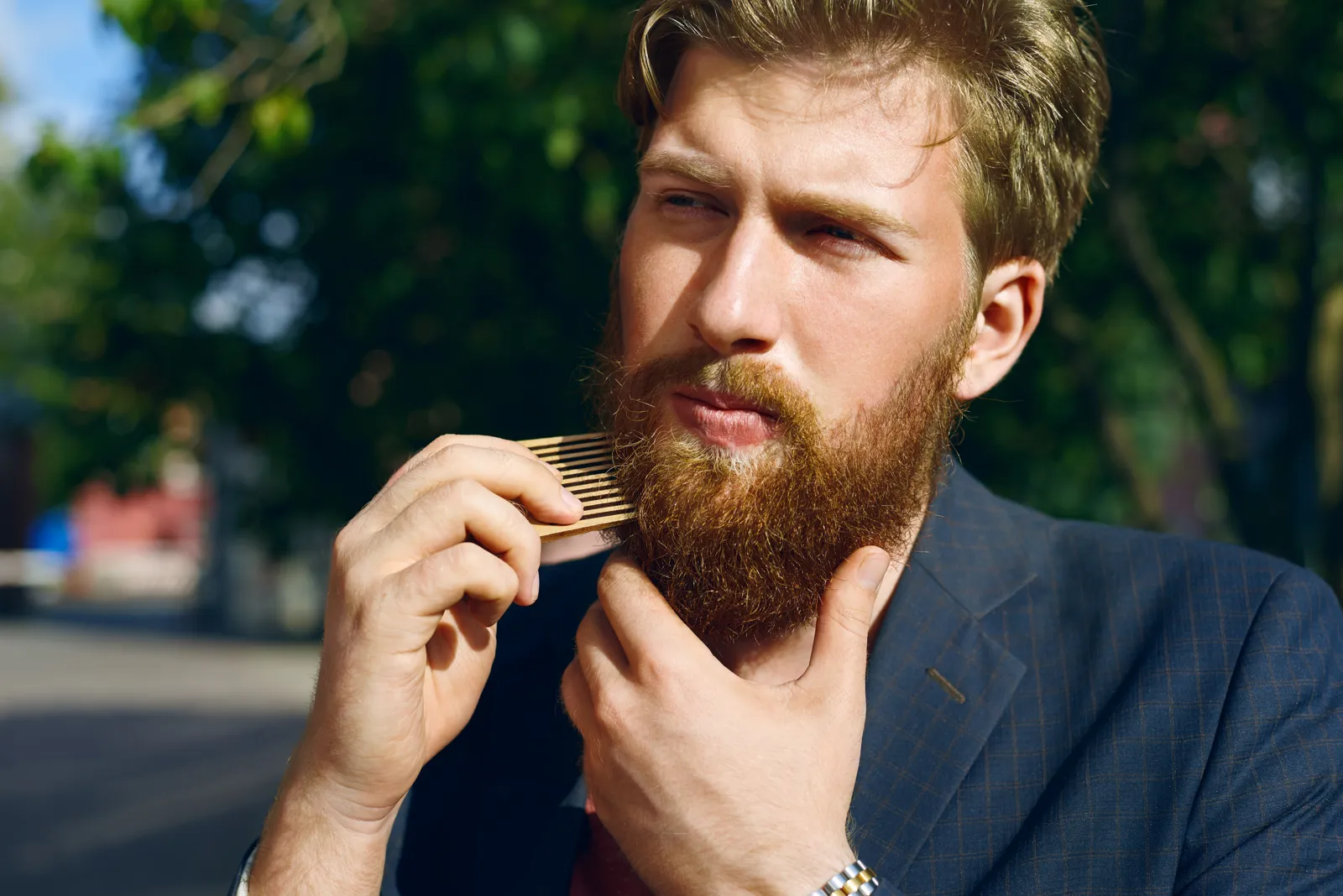
How many grafts a full beard, moustache or goatee needs, what the first week looks like and the month when results start to show.
A beard transplant moves hair follicles from the donor area of the scalp, usually the back of the head, to parts of the face where the beard is missing or patchy. A full beard typically needs 2,000 to 4,000 grafts, new growth appears from month 3 or 4, and the final look is judged at around 12 months. This guide explains how grafts are estimated, what to expect week by week, and how the procedure is organised in Yerevan, Armenia.
What is a beard transplant and how is it done?
The usual technique is FUE: the surgeon removes follicular units one by one from the back of the scalp, where hair resists shedding, and places them in the face through micro-incisions or with a DHI-style implanter pen. For the beard, mostly one- and two-hair grafts are used, because facial hair grows singly or in pairs.
What really separates a natural result from an obvious one is angle and direction. Beard hair grows at a sharp angle and changes direction across the face: downward on the cheeks, sideways on the moustache, fanning out under the chin. Hairs placed too upright look artificial however dense they are.
The procedure is done under local anaesthetic, takes 4 to 8 hours depending on graft numbers, and you go home the same day.
How many grafts do I need for a beard?
It depends on the area, the density you want and the hair you already have. These ranges are a general guide; your surgeon confirms them from your photos:
| Area | Approximate grafts |
|---|---|
| Moustache | 350–800 |
| Goatee | 600–1,200 |
| Sideburns (each) | 200–300 |
| Cheeks (each) | 300–700 |
| Full beard | 2,000–4,000 |
| Scar or isolated patch | 100–400 |
Something many people overlook: the donor area is finite, and it is the same reserve you may need later for a scalp hair transplant. If you already have a receding hairline, your surgeon will plan around that so your options stay open.
Who is a good candidate for a beard transplant?
- Men with a sparse or patchy beard for genetic reasons.
- People with facial scars (injury, acne, surgery) where hair does not grow.
- Anyone who wants to define the outline, for example joining moustache and goatee.
- Trans men seeking a more masculine face, with timing agreed with their medical team.
It is not a good idea with active alopecia areata in the beard, an uncontrolled skin condition, or a very weak donor area. It also makes sense to wait until your beard has finished maturing; in some men it keeps filling in until their late twenties.
Beard transplant recovery day by day and week by week
- Days 1 to 3: redness and tiny crusts around each graft, some swelling. No touching or rubbing.
- Days 4 to 10: gentle washing as instructed by the clinic. Crusts fall away by the end of the first week.
- Weeks 2 to 4: most transplanted hairs shed. This is normal; the root stays alive. You can usually trim with clippers once your surgeon allows it, often after 10 to 14 days.
- Months 3 to 4: new hairs start to grow, fine and uneven at first.
- Months 6 to 9: the beard gains density and thickness.
- Month 12: close to the final result. Some patients choose a second session for more density.
The donor area is left with tiny dot marks that hide under hair. The most common issues are folliculitis (small spots), ingrown hairs, longer-lasting redness and, with poor technique, unnatural angles.
Transplanted hairs keep the character of scalp hair, so they can be slightly finer and straighter than native beard hair. With time and regular shaving they blend well in most men. Once healed, you can shave, trim, shape and dye the beard as usual.
What to ask before a beard transplant
A short list of questions tells you a lot about the team you are dealing with:
- How many grafts do you estimate for me, and how much donor reserve will remain?
- Who makes the incisions and who places the grafts: the surgeon or technicians?
- How will the outline and the angle in each area be designed?
- Can I see before and after photos of your own beard cases, with graft numbers?
- What aftercare and remote check-ups are included?
Beard transplant in Yerevan: stay, flights and follow-up
Two to four days in Yerevan is usually enough: arrival and consultation, procedure day, and a check-up with the first wash. Flying the next day is generally fine because there are no large wounds; wear a face mask and avoid resting your face against the window.
Follow-up continues by photos at months 1, 3, 6 and 12, and a local dermatologist can see you in person if anything needs checking. Medarmenia coordinates the consultation, transfer, accommodation and an interpreter; see our services for details.
How much does a beard transplant cost?
Beard transplant cost depends mostly on the number of grafts, the technique (FUE with micro-incisions or DHI), whether it is combined with a scalp transplant, and what transfers and accommodation are included. We do not publish set prices: the surgeon estimates your grafts from photos and we prepare a personal estimate.
Frequently asked questions
Is a beard transplant permanent?
In most cases, yes. The follicles come from an area that resists hair loss and keep that trait in their new location.
When will I see beard transplant results?
The first hairs appear around month 3 or 4, improvement is obvious by month 6, and the final result is assessed at about 12 months.
Does a beard transplant hurt?
It is done under local anaesthetic, so the most uncomfortable part is usually the initial injections. Expect tightness and tenderness for a few days afterwards.
When can I shave after a beard transplant?
Trimming with clippers is usually allowed after 10 to 14 days and a razor after 3 to 4 weeks, depending on your surgeon’s advice.
Will there be visible scars on my face?
The micro-incisions are tiny and are not usually visible once healed. Some redness can last a few weeks, especially on fair skin.
Want to know how many grafts you would need? Send photos of your beard area and the back of your head through our contact page. We will arrange a free online consultation with a Yerevan specialist and a personal estimate.
This article is for general information and does not replace a consultation with a qualified doctor.
Medical information notice
This article is general information for planning purposes and does not replace advice from a qualified medical professional.