HIFU facial: how non-surgical lifting works, its limits and results
How a HIFU facial works, how much lift you can really expect, how long it lasts, who is a good candidate and when a facelift makes more sense.
A HIFU facial (high-intensity focused ultrasound) concentrates ultrasound energy at set depths under the skin, including the SMAS, the superficial muscle layer that surgeons work on in a facelift. The heat creates tiny coagulation points that stimulate collagen and give a subtle, gradual tightening without incisions. It suits mild to moderate laxity; it does not replace surgery when skin has clearly dropped.
This guide explains how it works, what results to expect, recovery time, who should avoid it, and how it fits a trip to Yerevan, Armenia.
What is a HIFU facial and how does it work?
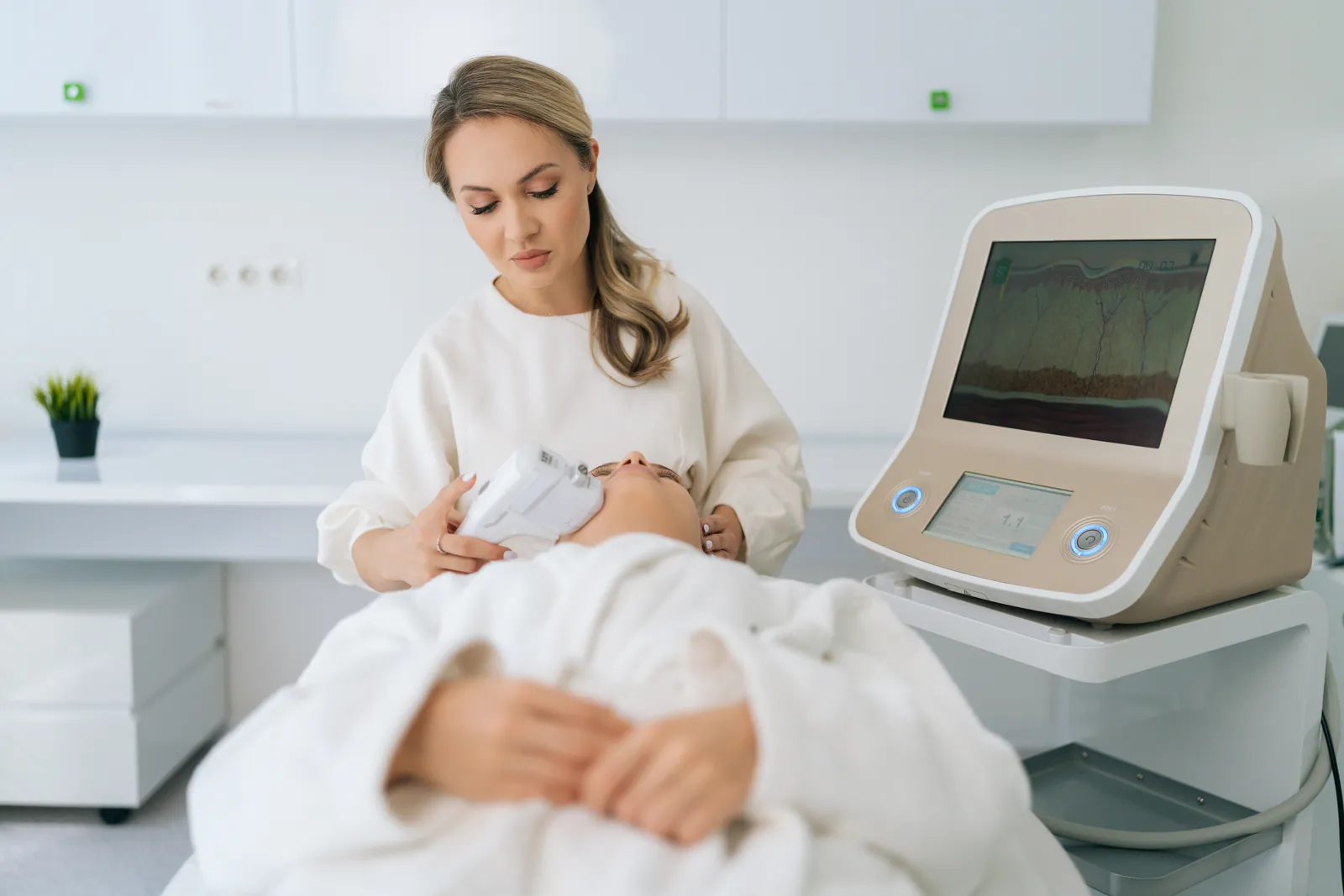
A handpiece emits ultrasound that converges on a point, much as a magnifying glass focuses light. At that point the temperature rises enough to cause a micro thermal injury, while the skin surface stays intact. The most common cartridges work at around 1.5, 3 and 4.5 millimetres deep.
Ultherapy, made by Merz, is one of the most studied devices and has built-in ultrasound imaging so the practitioner can see the layers while treating. Many other HIFU devices exist, with different quality and power. That is why “which device do you use?” matters as much as the price.
Who is a good candidate for HIFU facial treatment?
It is commonly used for:
- Slightly low brows and a heavier upper eyelid.
- Early loss of jawline definition.
- Mild laxity under the chin and on the neck.
- Lines on the décolletage.
The best candidates are usually between their 30s and mid-50s, with reasonable skin quality and mild to moderate laxity. With a lot of excess skin, marked sagging or very thin skin, results are limited and a facelift is more effective.
HIFU facial before and after: results and how long they last
Setting expectations is the key point. HIFU gives moderate tightening, not a dramatic change. “HIFU facial treatment before and after” photos with spectacular results often combine treatments or use different light and angles.
| Point | HIFU facial | Surgical facelift |
|---|---|---|
| Incisions | None | Yes, hidden in the hairline and around the ear |
| Anaesthesia | Usually none, or painkillers | General or sedation |
| Degree of lift | Subtle to moderate | Marked |
| When it shows | Gradually, 2 to 3 months, up to 6 | After swelling settles, weeks to months |
| How long it lasts | Around 1 to 2 years | Several years |
| Back to normal life | Same or next day | 2 to 3 weeks |
One session is usually enough, with a top-up every 12 to 18 months depending on how you age. Some lower-powered devices are used over several sessions.
HIFU facial recovery time and discomfort
A face and neck session takes 60 to 90 minutes. You feel deep pulses of heat, stronger over bone; some doctors give painkillers beforehand. Afterwards:
- First hours: mild redness that usually fades quickly.
- First days: slight swelling and tenderness when touching or chewing.
- Weeks 1 to 3: some people have patches of tingling or temporary numbness.
You can wear make-up and go back to work almost immediately. As for the common question “can I have a facial after HIFU?”: a gentle cleansing facial is usually fine after a few days, but peels, laser or radiofrequency on the same area should wait until your doctor clears it.
HIFU facial risks and who should avoid it
Your doctor should check first for:
- Pregnancy and breastfeeding.
- Open wounds, inflamed acne or infection in the area.
- Metal implants or electronic devices in the treatment zone.
- Recent fillers or thread lifts, because of treatment order.
- A very thin face, where any loss of fat would show more.
Possible risks include bruising, superficial burns, nerve irritation with temporary weakness or numbness and, uncommonly, fat loss that hollows the face. Technique, energy settings and the practitioner’s experience make the difference.
HIFU, radiofrequency or threads: how to choose
At consultation you may hear about several technologies at once. Put simply:
- HIFU: works deep, down to the SMAS, without needles. A good option for the jawline, under the chin and brows when laxity is mild.
- RF microneedling (such as Morpheus8): treats skin and superficial fat; improves texture, pores and scars as well as tightening a little.
- Thread lift: repositions tissue mechanically, with a quicker but also temporary effect.
- Surgical facelift: the only option that removes excess skin and repositions tissue for the long term.
There is no single best technique in the abstract. Your doctor chooses based on skin thickness, degree of laxity, age, budget and how much downtime you can accept. If a combination is suggested, ask about order and intervals, because the heat from HIFU can affect fillers or threads placed shortly before. A good practitioner will also tell you plainly when a device is unlikely to meet your expectations.
HIFU facial in Yerevan and what drives the cost
Unlike many aesthetic treatments, HIFU is usually a single session, so it can fit into one trip. It is most often combined with something else, for example HIFU on the neck while you recover from eyelid surgery, or as an alternative if the surgeon finds at consultation that you do not need a facelift yet. You can usually fly the next day.
Cost mainly depends on the device (Ultherapy or another), number of lines or shots, areas treated and whether the cartridge is new. We do not quote figures; Medarmenia checks which device each clinic really uses and prepares a personal estimate. Check entry rules for your nationality before travelling.
Frequently asked questions
Does a HIFU facial hurt?
Yes, it can be quite uncomfortable in some areas, felt as deep, sharp heat. Each pulse is brief, and painkillers help.
When will I see HIFU results?
Some tightening may be felt early, but the real effect builds gradually over 2 to 3 months and can keep improving up to 6.
How long does HIFU last?
Usually one to two years, depending on age, skin and lifestyle. Ageing continues, which is why top-ups are suggested.
Is HIFU better than Morpheus8?
They work differently: HIFU targets deeper layers without needles, while Morpheus8 treats skin and superficial fat with RF microneedling. Your doctor chooses based on your skin and goal.
HIFU or a thread lift?
HIFU stimulates collagen without inserting anything; threads reposition tissue with a more immediate effect. They can be combined in the order your doctor sets.
Torn between HIFU and a facelift? Send us front and profile photos. We arrange an online consultation with a specialist in Yerevan and a personal estimate, with no obligation.
This article is for general information and does not replace a consultation with a qualified doctor.
Medical information notice
This article is general information for planning purposes and does not replace advice from a qualified medical professional.